
Ask about Vilon side effects and sellers answer "none known." The honest version is different. There are 0 Western RCTs of Vilon, for any use, so no one has ever collected them.
The short answer. No human safety study of Vilon has been published, in any indication.
- There are 0 Western RCTs and 0 Phase III trials of Vilon, all-time.
- The 20+ preclinical papers measured effects, not toxicity, and came mostly from one lab.
- Animal work reports real changes, including gene expression shifts in mouse heart in 2002, so the compound is not inert.
Vilon has no published human safety record. There are 0 Western RCTs, for any use. No Phase I safety trial has ever been published. The animal work measured effects, not toxicity. Gene activity shifted in mouse heart tissue in 2002. So "no side effects" here means nobody looked.
What the Vilon safety record actually contains
It contains animal work. Vilon is a two-amino-acid peptide, Lys-Glu, about ~275 Da. The Khavinson group in St. Petersburg has published 20+ preclinical papers on it. Almost none of them were designed to find harm.
That is the whole problem with this query. A study that asks "did the mice live longer" is not a study that asks "what did this damage." They use different designs, different endpoints and different reporting.
- Species. Mice, rats, and human and animal cells in culture.
- Endpoints. Lifespan, tumor incidence, digestive enzyme activity, gene expression, thymus cell behavior.
- Source. One lab produced nearly all of it. Western labs have barely tried to repeat the work.
- Human trials. 0 Phase III trials of Vilon, all-time.
The background is set out in the Vilon complete guide. What follows is only the safety question.
Has anyone reported side effects from Vilon?
Not in the Western literature we can search. There is no Phase I report, no adverse event table, no case series, and 0 Western RCTs in PubMed for any indication.
Side effects are not found by waiting. They are found by giving a compound to people under a protocol, asking them structured questions, running labs, and publishing the counts. None of that has happened with Vilon in the open record.
"No reported side effects" and "no studied side effects" look identical from the outside. Only one of them is information. For Vilon it is the second.
This also means the usual safety questions have no answer. Nobody has published how long Vilon stays in human blood, what dose range humans tolerate, how it behaves alongside medication, or what happens over months rather than weeks.
The animal data show the compound is not inert
This is the part that should make a careful reader slow down. Vilon is small, but the published work keeps measuring changes.
In 2000, Khavinson and colleagues reported in the Bulletin of Experimental Biology and Medicine that median lifespan was extended in mice given intramuscular Vilon. In 2002, Anisimov and colleagues used DNA microarrays and reported shifts across multiple inflammation and stress-response gene clusters in mouse heart. In 2001, a separate paper reported changed digestive enzyme activity in rats of different ages. In 2013, Sevostianova and colleagues reported immunomodulating effects in cultured human and animal thymus cells.
Short peptides regulate gene expression, protein synthesis and enhance life span.
Khavinson & Popovich, chapter title, Drug Discovery, Royal Society of Chemistry, 2015Take that claim at face value for a moment. A molecule that reaches gene expression is a molecule with a plausible route to unwanted effects as well as wanted ones. The mechanism that makes the marketing interesting is the same mechanism that makes an unmeasured safety profile worth naming.
Inhibitory effect of peptide Vilon on the development of induced rat urinary bladder tumors.
Pliss, Mel'nikov, Malinin & Khavinson, title, Bulletin of Experimental Biology and Medicine, 2001That 2001 paper is often quoted as reassurance about cancer. Read the design instead. Tumors were chemically induced in rats, and the measure was whether fewer developed. It is a result in one carcinogenesis model in one species. It is not a human cancer safety finding, and it does not transfer. The benefit side of this literature is covered in the Vilon benefits page.
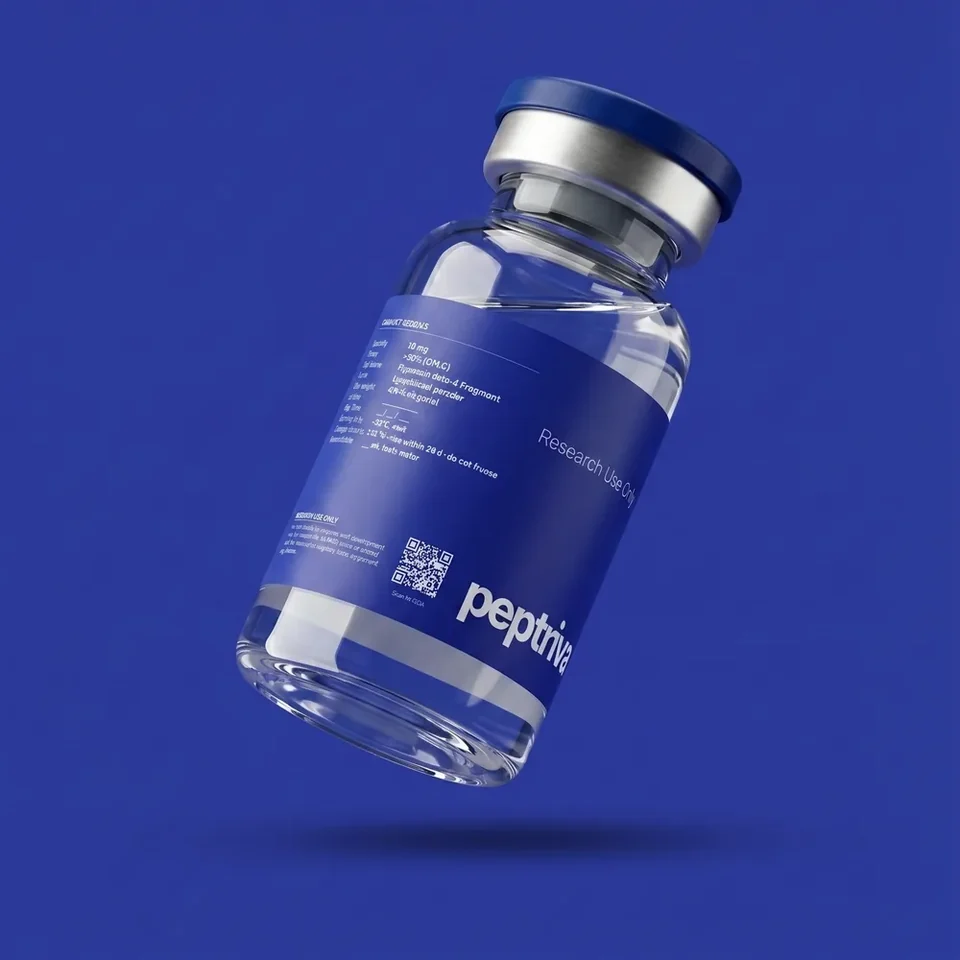
Vilon
The compound discussed here, supplied as a research compound with a certificate of analysis matched to the lot.
What a real safety record would contain
Here is the checklist a regulator would work through, and what the English-language record holds for Vilon.
| Safety document | What it answers | Published for Vilon |
|---|---|---|
| Acute toxicity study | What a single large exposure does | Not found in the English-language record |
| Repeat-dose toxicity | What weeks of exposure do to organs | Not found in the English-language record |
| Genotoxicity panel | Whether it damages DNA | Not found in the English-language record |
| Human pharmacokinetics | Where it goes and how fast it clears | None published |
| Phase I safety trial | Adverse events in healthy volunteers | None published |
| Phase III program | Harm rates at scale, versus placebo | 0 trials, all-time |
| Independent replication | Whether another lab sees the same thing | Minimal outside the originating group |
Every row is blank or close to it. The compound is not FDA-approved for any use, and the approval status of anything it resembles is not its status. Vilon in a research vial is a research chemical.
Risks that come from the vial, not the molecule
Even if Vilon itself were perfectly benign, a vial of it is a separate question. These are the hazards that exist regardless of what the peptide does.
- Identity and purity. A two-residue peptide is cheap to synthesize and easy to misrepresent. Ask for the batch document, not a generic one. See how to read a certificate of analysis.
- Sterility and endotoxin. Research vials are not required to meet injectable pharmaceutical standards. Endotoxin testing is rarely shown.
- Handling. Reconstitution and storage errors degrade material and introduce contamination. See reconstitution, bacteriostatic water and storage temperature.
- Legal status. Research-use-only is a sales category, not a safety claim. See are peptides legal.
None of this is specific to Vilon. All of it applies to Vilon.
What would actually change the answer
One published Phase I report would change more than the next ten animal papers. It would give a human exposure range, a clearance figure, and a list of what volunteers experienced. That list could be short. The point is that it would exist.
Independent replication would matter almost as much. Nearly all of the 20+ preclinical papers trace back to one group. The related short-peptide mechanism work, including the EDR paper published in Molecules in 2020, comes from the same research line. A single Western lab repeating the thymus cell result would tell you more than a decade of restatement.
Until then, the correct sentence is not "Vilon is safe" and not "Vilon is dangerous." It is that the safety of Vilon in humans has not been measured. The before-and-after page reaches the same wall from the other direction.
Vilon
Research-use-only material, sold by the vial with batch documentation. Check the certificate of analysis against the batch you receive.
What to know now
- No human safety study of Vilon has been published, in any indication.
- There are 0 Western RCTs and 0 Phase III trials of Vilon, all-time.
- The 20+ preclinical papers measured effects, not toxicity, and came mostly from one lab.
- Animal work reports real changes, including gene expression shifts in mouse heart in 2002, so the compound is not inert.
- Purity, sterility and storage are separate risks that apply to any research vial.
What we're watching
Watch for the phrase "no reported side effects" on a product page. With 0 Western RCTs and no published Phase I, there is no reporting system that could have produced that sentence. It describes an absence of study, not an absence of harm.
Frequently asked questions
Is Vilon safe?
Unknown. No human safety trial of Vilon has been published, so there is no adverse event rate, no tolerated exposure range and no clearance data to cite. Safety is a measured thing, and for Vilon it has not been measured in people.
What side effects has Vilon caused in studies?
The published studies are in mice, rats and cultured cells, and they report effects such as lifespan change, gene expression shifts and immune cell changes rather than toxicity outcomes. We found no English-language toxicology study and no human adverse event report.
Is Vilon FDA approved?
No. Vilon is not FDA-approved for any use. It is sold as a research chemical, and research-use-only labeling is a sales category, not a safety or quality assurance.
Could Vilon affect the immune system?
That is the claim sellers make, and the evidence behind it is a 2013 Bulletin of Experimental Biology and Medicine paper on cultured human and animal thymus cells. Whether anything similar happens in a living person, in either direction, has not been tested.
Is Vilon banned in sport?
Our complete guide records that Vilon is not on the WADA prohibited list. Prohibited lists are revised annually, so anyone subject to testing should check the current version rather than rely on a page.
References
- Khavinson, V. K., Anisimov, V. N., Zavarzina, N. Y., Zabezhinskii, M. A., Zimina, O. A., Popovich, I. G., Shtylik, A. V., Malinin, V. V., & Morozov, V. G. (2000). Effect of vilon on biological age and lifespan in mice. Bulletin of Experimental Biology and Medicine, 130(7), 687–690. https://doi.org/10.1007/bf02682106
- Khavinson, V. Kh., Timofeeva, N. M., Malinin, V. V., Egorova, V. V., & Nikitina, A. A. (2001). Effect of the dipeptide Vilon on activity of digestive enzymes in rats of various ages. Bulletin of Experimental Biology and Medicine, 132(3), 866–868. https://doi.org/10.1023/a:1012319122696
- Pliss, G. B., Mel'nikov, A. S., Malinin, V. V., & Khavinson, V. Kh. (2001). Inhibitory effect of peptide Vilon on the development of induced rat urinary bladder tumors. Bulletin of Experimental Biology and Medicine, 132(2), 791–793. https://doi.org/10.1023/a:1012354603132
- Anisimov, S. V., Khavinson, V. Kh., & Anisimov, V. N. (2002). Studies of the effects of Vilon and Epithalon on gene expression in mouse heart using DNA-microarray technology. Bulletin of Experimental Biology and Medicine, 133(3), 293–299. https://doi.org/10.1023/a:1015859322630
- Sevostianova, N. N., Linkova, N. S., Polyakova, V. O., Chervyakova, N. A., Kostylev, A. V., Durnova, A. O., & Kvetnoy, I. M. (2013). Immunomodulating effects of Vilon and its analogue in the culture of human and animal thymus cells. Bulletin of Experimental Biology and Medicine, 154(4), 562–565. https://doi.org/10.1007/s10517-013-2000-0
- Khavinson, V., & Popovich, I. (2015). Short peptides regulate gene expression, protein synthesis and enhance life span. In Drug Discovery (Chapter 20, pp. 496–513). Royal Society of Chemistry. https://doi.org/10.1039/9781782626602-00496
- Khavinson, V., Linkova, N., Kozhevnikova, E., & Trofimova, S. (2020). EDR Peptide: Possible mechanism of gene expression and protein synthesis regulation involved in the pathogenesis of Alzheimer’s disease. Molecules, 26(1), 159. https://doi.org/10.3390/molecules26010159