
Vilon is a two-amino-acid peptide, Lys-Glu, from Vladimir Khavinson's Russian research school. The animal data is real. The Western human evidence is zero, and we found no independent lab that has reproduced any of it.
The short answer. Vilon is a Lys-Glu dipeptide from the Khavinson school. Two amino acids, ~275 Da, no synthetic modifications.
- The evidence base is preclinical and single-source. ~20+ Khavinson-group preclinical papers; ~0 independent Western RCTs.
- Not FDA- or EMA-approved. Research reference compound only in the US.
- The proposed mechanism is interesting but unverified. Direct DNA/histone binding by a 2-residue peptide is biophysically unusual and not independently replicated.
Vilon is a synthetic dipeptide. Its sequence is Lys-Glu, written KE. It came out of Vladimir Khavinson's lab in St. Petersburg. That was in the 1990s. It is sold for immune support. It is also sold for "age-related thymus decline."
The Khavinson group has published 20+ preclinical papers on it. Western labs have barely tried to repeat that work. There are 0 Western RCTs, for any use. It is not FDA-approved. It is not on the WADA list.
Quick answer
Vilon is a two-amino-acid peptide, Lys-Glu. It comes from the Khavinson Russian research school. The animal biology is real but narrow. It is also almost entirely single-source. No Western Phase II or III trial exists. Treat Vilon as a third-party tested reference compound, not a therapy. The whole cytogen family shares this evidence profile.
What is Vilon, structurally?
Vilon is a dipeptide. It holds two amino acids: lysine and glutamic acid. The Khavinson team calls it the KE peptide, using the single-letter codes. It is one of the shortest molecules in their cytogen family. Pinealon is 3 amino acids. Epithalon is 4. Cortagen, Livagen, Cartalax and Testagen round out the set.
Vilon weighs ~275 Da. No lipid tail. No PEG. No D-amino acid swap. That makes synthesis cheap. Two coupling steps on a solid-phase resin build it. The compound ships as a freeze-dried powder. Bacteriostatic water reconstitutes it for in vitro use.
Who is Khavinson, and where does Vilon fit?
You cannot evaluate Vilon without knowing the program that produced it. Vladimir Khavinson and his team work in St. Petersburg. Since the 1970s they have pushed one research hypothesis. Short peptides extracted from organs act as "bioregulators". Those bioregulators direct tissue-specific gene expression.
The first generation was crude extracts. They called the pineal extract Epithalamin. They called the thymus extract Timalin. The second generation is the cytogens. Those are synthetic short peptides built to mimic the extracts. Each has a defined 2- to 4-residue sequence. Vilon is the synthetic stand-in for Timalin. Epithalon is the stand-in for Epithalamin, per Khavinson and Popovich in 2015.
The proposed mechanism is unusual. The Khavinson team argues that a short peptide enters a cell. It then slips into the nucleus. There it binds directly to DNA, or to histones. Histones are the proteins DNA wraps around. That binding then tunes gene expression in a tissue-specific way.
For Vilon, the target tissue is the thymus and the wider immune system. The claimed effect is restoring thymocyte proliferation in aged subjects, per Sevostianova and colleagues in 2013.
We find that mechanism interesting and unverified. A two-amino-acid molecule binding DNA directly would be biophysically strange. Most regulatory peptides work through cell-surface receptors, not by reaching into the nucleus. Western mechanistic biochemistry hasn't replicated the direct-binding claim. Read it as a research hypothesis, not settled molecular biology.
What does the preclinical evidence actually show?
Search PubMed for Vilon and you'll find the substantive results cluster into four buckets.
1. Mouse lifespan and biological age
The flagship paper is Khavinson et al., 2000. Median lifespan extended in mice on intramuscular Vilon, 2000. Aging markers improved. The study ran at the St. Petersburg institute. No Western lab has reproduced it.
2. Immune and thymus cell-culture work
The 2013 Sevostianova et al. paper reports immune effects in cultured thymus cells, 2013. Changes in cytokines and thymocyte proliferation. It's in vitro work from the same consortium.
3. Gene-expression in mouse heart
The 2002 Anisimov et al. paper used DNA microarrays to track Vilon's effect on heart-tissue gene expression. Multiple inflammation and stress-response gene clusters shifted in mouse heart, 2002. Single-lab.
4. Cancer inhibition
The 2001 Pliss et al. paper reports reduced bladder tumor development in rats, 2001. If real and replicable, that would be a chemopreventive signal. It hasn't been replicated. And the model doesn't map cleanly to human cancer.
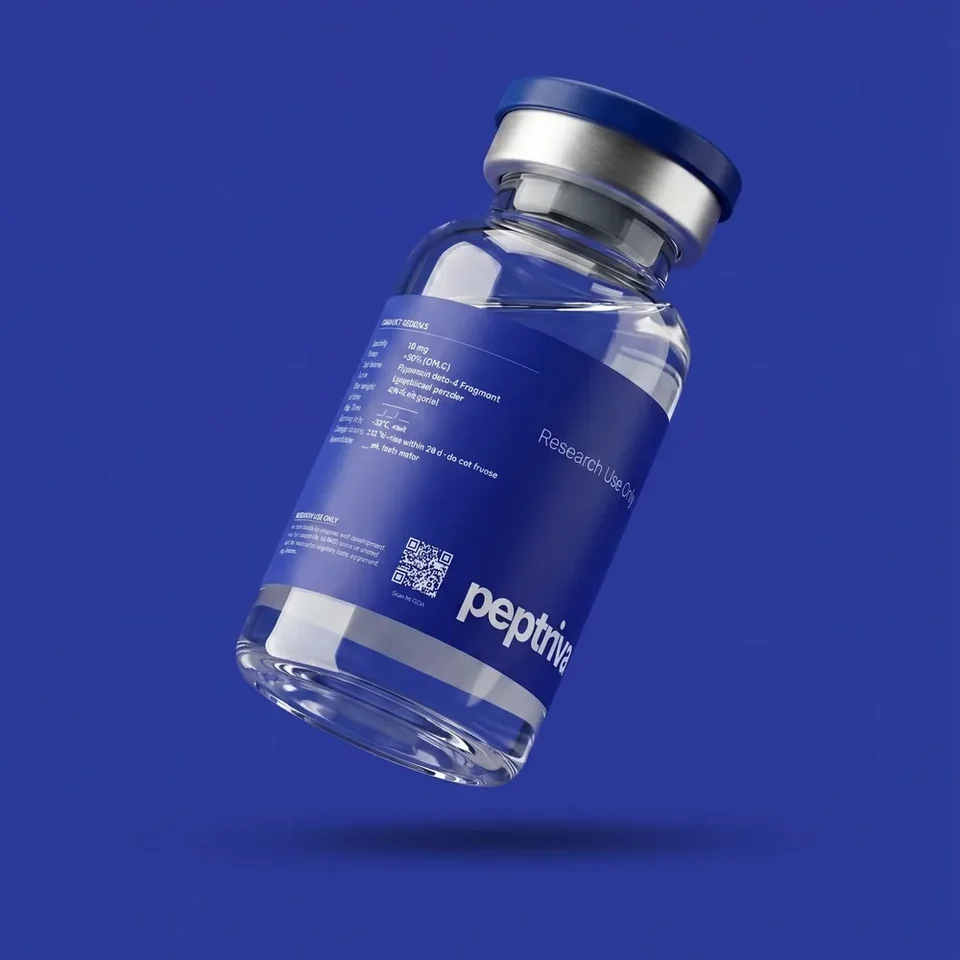
Vilon (Lys-Glu)
The same compound cited across the 4 Khavinson-group studies reviewed in this monograph. Vilon is on Peptriva's research roadmap. BPC-157 is an available reference compound with a substantially deeper independent preclinical evidence base.
What about human evidence?
The Khavinson group has described Vilon use in older study participants with weakened immune systems, research subjects in chemotherapy cohorts, and elderly populations with reduced thymus function. Several reports describe changes in lymphocyte counts, cytokine profiles, and symptom scores.
None of these reports are PubMed-indexed Western randomized trials. They're older Russian-language clinical observations. Single-center. Often without blinding or placebo control. They informed Russian clinical practice in narrow niches, like elderly immune support and chemotherapy adjuncts.
They don't meet Western regulatory standards. As of May 2026, our count stands at 0 Western RCTs in PubMed, any indication, and 0 Phase III trials of Vilon, all-time.
Where this falls short
Every Vilon claim traces back to one consortium. Inside that group, the work is internally consistent and methodologically standardized. Outside it, replication is essentially absent. That's the single most important thing we can tell you about Vilon. The mechanism may be real. The science may be honest. But until independent confirmation exists, the literature rests on one research school.
What benefits get claimed (with caveats)?
- Thymocyte proliferation and immune cell maturation. Supported by in vitro Khavinson cell-culture work. No human RCT validation.
- Age-related immune decline modulation. Khavinson preclinical claims and older Russian clinical observations. Not validated in Western trials.
- Cancer chemoprevention. A single Russian rat study in a chemically induced bladder model. No independent replication.
- Lifespan extension in mice. A single Khavinson mouse study. Not replicated.
- Cytokine and gene-expression effects. In vitro and mouse heart-tissue work from the Khavinson program.
What are the risks and unknowns?
The Khavinson literature reports a favorable safety profile in animals and observational clinical contexts. No major toxicity. No consistent adverse-event signal. Don't read that as Western-RCT-grade safety data. Specific concerns:
- No published Western safety database. Older Russian clinical practice didn't collect adverse events to Western pharmacovigilance standards.
- Theoretical autoimmune concerns. A peptide claimed to tune gene expression directly raises long-term questions about immune balance, oncology, and development that haven't been studied in people.
- Drug interactions: unstudied. No formal interaction work with common medications.
- Grey-market quality. Vilon is sold by grey-market vendors at variable purity. A third-party tested source should provide a third-party accredited Certificate of Analysis (a CoA, the one-page lab report that verifies what's in the vial) showing HPLC purity and mass-spec identity.
What's the legal status?
- FDA (US): not approved. Legal to sell as a research compound labeled "for laboratory use only." Not legal to sell or market for human therapy.
- EMA (EU): not approved.
- Russia: Khavinson-school clinical use history within the Russian medical system. Not a registered Western drug.
- WADA Prohibited List: Vilon is not explicitly listed on the 2026 list. The cytogens are not formally categorized. Athletes in sports with testing programs should verify status with their governing body. WADA tends to take a broad view on compounds that modulate gene expression.
Vilon (Lys-Glu)
Lys-Glu synthetic dipeptide; the Khavinson-school cytogen referenced across the preclinical studies cited above. Peptriva is evaluating Vilon for the cytogen research line alongside Epithalon. For confirmed-stock options, see the catalog.
Where does Vilon sit in the cytogen family?
Vilon is one of about half a dozen synthetic short-peptide cytogens from the Khavinson program. Each sibling targets a different tissue. They all share the same evidence profile. The map:
- Vilon (Lys-Glu, 2 aa): thymus and immune system. The subject of this guide.
- Epithalon (Ala-Glu-Asp-Gly, 4 aa): pineal gland, proposed telomerase activation. Read the Epithalon guide.
- Pinealon (Glu-Asp-Arg, 3 aa): neuroprotection.
- Cortagen (Ala-Glu-Asp-Pro, 4 aa): brain cortex.
- Livagen (Lys-Glu-Asp-Ala, 4 aa): liver.
- Cartalax (Ala-Glu-Asp-Pro, 4 aa): cartilage and bone.
- Testagen (Lys-Glu-Asp-Arg, 4 aa): prostate.
Across all of these we see the same pattern: single-source authorship, no Western replication, no FDA or EMA approval. The Russian neuropeptides overview covers the cognitive members.
Frequently asked questions
What is Vilon?
Vilon is a synthetic dipeptide with the sequence Lys-Glu. It was developed by Vladimir Khavinson and colleagues in St. Petersburg. It's part of their cytogen research program and is marketed for immune support and thymus function. It isn't FDA-approved. Its evidence base is overwhelmingly Khavinson preclinical work, with essentially no Western RCT replication.
Vilon vs Testagen vs Cartalax: what's the difference?
All three are Khavinson short-peptide cytogens studied for different tissue targets. Vilon has been studied in the context of immune system and thymus function. Testagen has been studied in the context of prostate tissue. Cartalax has been studied in the context of cartilage and bone. They share the same evidence profile and the same regulatory status: not FDA- or EMA-approved.
Is Vilon FDA-approved?
No. It isn't approved by the FDA or EMA for any indication. The Khavinson consortium has published clinical observations in older Russian medical literature, but no Western RCT exists. In the U.S., you can legally buy Vilon only as a research compound labeled for laboratory use.
How does Vilon work?
The proposed mechanism is that short peptides like Vilon enter cells, slip into the nucleus, and tune gene expression by binding DNA or histones directly. Khavinson studies have reported effects on cytokines, thymocyte proliferation, and gene expression in mouse heart tissue. Western mechanistic biochemistry has not replicated the direct-binding claim. The mechanism remains a research hypothesis.
What's the broader cytogen evidence?
The Khavinson program has published several hundred papers on short-peptide bioregulators over four decades. That includes extensive work on Vilon, Epithalon, Pinealon, Cortagen and Livagen. The work is real and internally consistent.
The catch is single-source authorship. Almost no independent Western replication. No Phase III trials to Cochrane standards. No FDA or EMA approvals. The honest framing is third-party tested, not therapeutic-grade.
“
The Russian preclinical literature on the Khavinson cytogens is extensive. What it isn't, is independently replicated to Western RCT standards. Both things are true at the same time, and the honest third-party tested framing has to hold both.
— WTBP Research Team, monograph editorial
What to know now
- Vilon is a Lys-Glu dipeptide from the Khavinson school. Two amino acids, ~275 Da, no synthetic modifications.
- The evidence base is preclinical and single-source. ~20+ Khavinson-group preclinical papers; ~0 independent Western RCTs.
- Not FDA- or EMA-approved. Research reference compound only in the US.
- The proposed mechanism is interesting but unverified. Direct DNA/histone binding by a 2-residue peptide is biophysically unusual and not independently replicated.
What we're watching
Three threads to track. First: whether any Western or Asian lab registers an independent replication of Khavinson's preclinical claims. The thymocyte and gene-expression findings are the most testable ones.
Second: whether anyone publishes peer-reviewed biophysics that confirms or rules out the direct-DNA-binding mechanism. Third: whether any Phase II trial gets registered for Vilon or a sibling cytogen with a clear endpoint. That's the trial that would turn the Russian legacy into Cochrane-readable evidence. The answer for 25 years has been no.
What people actually report
These are self-reports, not evidence. No control group, no blinding, and no independent check that the vial held what the label claimed. They are collected here because people asking about Vilon deserve an answer rather than a refusal, and because what the community believes is itself worth knowing. Quotes are excerpts; each links to the original post.
Uncontrolled self-report, and thin. Vilon barely appears on Reddit, and the first-hand accounts never run it on its own: each one pairs it with VIP or thymulin, so nothing here isolates Vilon. The most detailed thread claimed an overnight remission in 2022, then the same author added an update in 2024 downgrading that to a positive effect in about a quarter of people, and not durable. A CIRS commenter credits a course with less brain fog a year on, then raises placebo unprompted. The dissent is that better-researched compounds do the same job. None of it is controlled and none of it is verified.
Where the community and the published record disagree. The community talks about Vilon as a healing compound, a gentler BPC-157, and a Vilon video on YouTube sells it for autoimmune disease. The literature never measured that. A PubMed search pairing vilon with wound, tendon, healing or tissue repair returns three records, and none of them studies musculoskeletal repair: two are rat studies of radiation exposure and premature aging, and the third is a 1991 French survey of bone loss in anorexia nervosa that matched on an author name, not on the peptide. A search for vilon alone returns 80 records, 27 of which name Vilon in the title, and those are dominated by rodent tumor and lifespan work, chromatin and thymocyte experiments, and small reports in diabetes patients of varying ages. The closest thing to repair anywhere in that body of work is a 2000 Tsitologiia paper on liver regeneration in rats poisoned with carbon tetrachloride. No wound, tendon or muscle study exists. The community has built a repair peptide on an evidence base that measured almost everything except repair.
“VIP/Vilon seems to only have had a positive effect on 25% of those who tried it and even then the effect was not durable.”
Great results with VIP/Vilon combo for ME/CFS/LongCovid (I'm vax injured)
“so I'm not entirely sure VIP and Vilon alone did the job, but I don't have PEM anymore”
“I’m left wondering why the peptide Vilon is so much less popular compared to BPC157, TB500, etc”
“Id say its not necesarrily unsafe its just not very worth the risk of the unknown when there are other compounds thatll do the same thing that have more research”
“Anecdotally they have had long lasting benefits as I did a course 1 year ago and I’ve had less brain fog since, but I don’t know how much of it is placebo”
“Vilon has incredible benefits for autoimmune diseases like Hashimoto’s, fibromyalgia, endometriosis, and rheumatoid arthritis”
Posts are quoted under fair use and linked to their authors. Nothing on this page is hosted here, and no claim above has been verified beyond confirming that the person wrote it.
References
- Khavinson, V. K., Anisimov, V. N., Zavarzina, N. Y., Zabezhinskii, M. A., Zimina, O. A., Popovich, I. G., Shtylik, A. V., Malinin, V. V., & Morozov, V. G. (2000). Effect of vilon on biological age and lifespan in mice. Bulletin of Experimental Biology and Medicine, 130(7), 687–690. https://doi.org/10.1007/bf02682106
- Khavinson, V. Kh., Timofeeva, N. M., Malinin, V. V., Egorova, V. V., & Nikitina, A. A. (2001). Effect of the dipeptide Vilon on activity of digestive enzymes in rats of various ages. Bulletin of Experimental Biology and Medicine, 132(3), 866–868. https://doi.org/10.1023/a:1012319122696
- Pliss, G. B., Mel'nikov, A. S., Malinin, V. V., & Khavinson, V. Kh. (2001). Inhibitory effect of peptide Vilon on the development of induced rat urinary bladder tumors. Bulletin of Experimental Biology and Medicine, 132(2), 791–793. https://doi.org/10.1023/a:1012354603132
- Anisimov, S. V., Khavinson, V. Kh., & Anisimov, V. N. (2002). Studies of the effects of Vilon and Epithalon on gene expression in mouse heart using DNA-microarray technology. Bulletin of Experimental Biology and Medicine, 133(3), 293–299. https://doi.org/10.1023/a:1015859322630
- Sevostianova, N. N., Linkova, N. S., Polyakova, V. O., Chervyakova, N. A., Kostylev, A. V., Durnova, A. O., & Kvetnoy, I. M. (2013). Immunomodulating effects of Vilon and its analogue in the culture of human and animal thymus cells. Bulletin of Experimental Biology and Medicine, 154(4), 562–565. https://doi.org/10.1007/s10517-013-2000-0
- Khavinson, V., & Popovich, I. (2015). Short peptides regulate gene expression, protein synthesis and enhance life span. In Drug Discovery (Chapter 20, pp. 496–513). Royal Society of Chemistry. https://doi.org/10.1039/9781782626602-00496
- Khavinson, V., Linkova, N., Kozhevnikova, E., & Trofimova, S. (2020). EDR peptide: Possible mechanism of gene expression and protein synthesis regulation involved in the pathogenesis of Alzheimer's disease. Molecules, 26(1), 159. https://doi.org/10.3390/molecules26010159