
Search vilon benefits and you get immunity, longevity, cancer protection and brain health. Trace each one back and you land on 20+ preclinical papers from a single St. Petersburg group, and 0 Western RCTs.
The short answer. Vilon is Lys-Glu, a dipeptide of about 275 Da, from Khavinson's St. Petersburg lab.
- Every marketed benefit traces to a mouse, a rat, or a cell culture. There are 0 Western RCTs and 0 Phase III trials.
- The immune claim is a 2013 thymus cell culture study. Human cells, no human subjects.
- The longevity claim is a single 2000 mouse study, reviewed later by the same group.
Vilon is a two-amino-acid peptide, Lys-Glu. Nearly all of its data comes from one Russian lab. The work is in mice, rats and cells in dishes. There are 0 Western RCTs, for any use. The immune claim rests on cultured thymus cells, 2013. No Phase III trial of Vilon has ever run.
What Vilon is before the claims start
Vilon is a dipeptide. Two amino acids, lysine and glutamic acid, written KE. It weighs about 275 Da, which makes it one of the smallest molecules sold as a research peptide.
It came out of Vladimir Khavinson's lab in St. Petersburg in the 1990s. That group has published 20+ preclinical papers on it. Western labs have barely tried to repeat the work. There are 0 Western RCTs in PubMed, any indication, and 0 Phase III trials of Vilon, all-time.
So every benefit printed on a Vilon product page traces back to a mouse, a rat, or cells in a dish. Not one of them traces to a controlled human trial.
The Vilon complete guide covers the chemistry and the regulatory status. This page handles the claims.
Vilon benefits, claim by claim, with the source
Here is the same list a vendor would give you, with the paper it belongs to. Read the species column first.
| Claim | Source paper | Species or system | What was measured |
|---|---|---|---|
| Immune support, thymus function | Sevostianova et al., 2013 | Human and animal thymus cells in culture | Immune marker changes in cells |
| Longevity, slower aging | Khavinson et al., 2000 | Mice, intramuscular | Biological age measures and lifespan |
| Cancer protection | Pliss et al., 2001 | Rats, chemically induced tumors | Bladder tumor development |
| Gene regulation | Anisimov et al., 2002 | Mouse heart tissue | Gene expression on DNA microarray |
| Digestive health | Khavinson et al., 2001 | Rats of various ages | Digestive enzyme activity |
| Memory, Alzheimer's | Khavinson et al., 2020 | Not Vilon. A different peptide, EDR | Gene expression mechanisms |
The last row is the one to notice. It is on many Vilon pages and it is not a Vilon study.
Does Vilon support the immune system?
Not shown in people. The immune claim rests on one 2013 paper in the Bulletin of Experimental Biology and Medicine, from Sevostianova, Linkova and colleagues at the St. Petersburg group.
Immunomodulating effects of Vilon and its analog in the culture of human and animal thymus cells.
Sevostianova et al., Bulletin of Experimental Biology and Medicine, 2013 (title)The phrase that matters is "in the culture." Human cells were involved, but no human was. Thymus cells in a dish have no blood supply, no liver, no kidneys and no immune system around them.
- What cell culture can show. That a molecule reaches a cell and changes something measurable inside it.
- What it cannot show. Whether the molecule survives injection, reaches the organ, or does anything a person would notice.
- What it cannot show, part two. Safety. Dose-response in a dish does not transfer to a body.
- The analog problem. The study tested Vilon alongside an analog, so not every reported effect belongs to Vilon alone.
This is the strongest human-tissue result Vilon has. It is a 2013 cell culture experiment, and that is the ceiling.
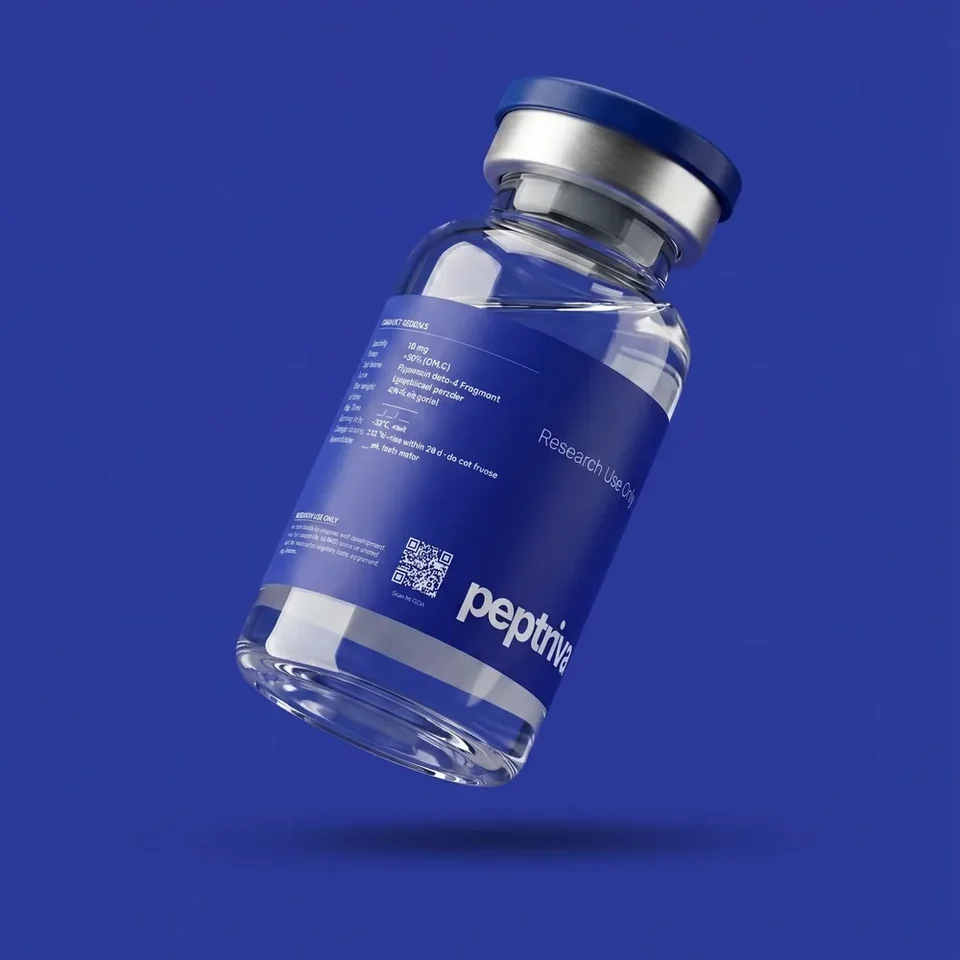
Vilon
The compound discussed here, supplied as a research compound with a certificate of analysis matched to the lot.
Does Vilon extend lifespan?
In mice, in one study, published in 2000. Khavinson, Anisimov and colleagues reported that intramuscular Vilon extended median lifespan in mice and shifted measures of biological age.
That is a real finding and it is worth reporting accurately. It is also a mouse result, from the lab that developed the compound, published twenty-five years ago. The 2015 review chapter that people cite as confirmation was written by Khavinson and Popovich, the same group.
Short peptides regulate gene expression, protein synthesis and enhance life span.
Khavinson & Popovich, Drug Discovery, Royal Society of Chemistry, 2015 (chapter title)The finding and the review that summarizes it share authors. That is not fraud, it is normal science. But it means the result has not been independently confirmed by a lab with nothing invested in it, and mouse lifespan results are famously hard to replicate across labs.
There is no human longevity data for Vilon. No trial has measured a person's lifespan, mortality rate, or any aging biomarker on this compound.
What about the cancer and digestion claims?
Both are rat studies from 2001, and both say less than the sales copy suggests.
Pliss and colleagues reported that Vilon inhibited the development of chemically induced urinary bladder tumors in rats. That is a chemoprevention model. The animals are given a carcinogen and the compound at the same time, and the question is whether fewer tumors appear. It is not a model of treating a tumor that already exists, and it is not a model of a person.
The digestion claim comes from Khavinson, Timofeeva and colleagues, who measured digestive enzyme activity in rats of different ages. It is a physiology experiment, not a trial of a symptom.
Inhibitory effect of peptide Vilon on the development of induced rat urinary bladder tumors.
Pliss et al., Bulletin of Experimental Biology and Medicine, 2001 (title)No human cancer data exists for Vilon. A vendor implying otherwise is describing a rat.
Which benefits belong to a different peptide?
Khavinson's lab made a family of short peptides, and the marketing treats them as interchangeable. The evidence does not.
- EDR is not Vilon. The 2020 Molecules paper from Khavinson, Linkova and colleagues is about EDR, a tripeptide of glutamic acid, aspartic acid and arginine, and Alzheimer's-related gene expression. Vilon is KE. Different molecule, different paper.
- Epithalon is not Vilon. The 2002 microarray study by Anisimov and colleagues tested Vilon and Epithalon in mouse heart. Effects reported for one get quoted for the other.
- "Bioregulator" is a category, not a result. Shared branding does not transfer evidence between compounds.
What the 2002 paper does support for Vilon is narrow: multiple inflammation and stress-response gene clusters shifted in mouse heart tissue. That is a mechanism signal in an organ of a mouse. It is not a benefit.
What you can actually verify before buying
Since the biology cannot be checked, the vial can be. These are the things that have documents behind them.
- Identity and purity. Ask for a batch-matched certificate of analysis with mass spec and HPLC. How to read a peptide COA explains what a real one shows.
- Mass. Vilon's small size, about 275 Da, is itself a check. A mass spec peak far from that is not KE.
- Handling. Storage temperature and bacteriostatic water are documented topics.
- Legal status. Vilon is not FDA-approved and is sold for research use. Are peptides legal covers the framework.
For how we compare sellers on paperwork rather than claims, see buying peptides online.
Vilon
Research-use-only material, sold by the vial with batch documentation. Check the certificate of analysis against the batch you receive.
What to know now
- Vilon is Lys-Glu, a dipeptide of about 275 Da, from Khavinson's St. Petersburg lab.
- Every marketed benefit traces to a mouse, a rat, or a cell culture. There are 0 Western RCTs and 0 Phase III trials.
- The immune claim is a 2013 thymus cell culture study. Human cells, no human subjects.
- The longevity claim is a single 2000 mouse study, reviewed later by the same group.
- The Alzheimer's claim belongs to EDR, a different Khavinson peptide, not to Vilon.
What we're watching
The thing that would change this page is a human trial, registered and run outside the Khavinson group, with a control arm and a published protocol. Until one exists, an independent Western replication of the 2000 mouse lifespan result would be the next most useful piece of evidence.
Frequently asked questions
Does Vilon boost the immune system?
Not demonstrated in people. The immune claim comes from a 2013 Bulletin of Experimental Biology and Medicine paper that treated human and animal thymus cells in culture. Cells in a dish are not an immune system, and no controlled human trial of Vilon has been published.
Does Vilon really extend lifespan?
It extended median lifespan in mice in a single study published in 2000 by Khavinson, Anisimov and colleagues, using intramuscular injection. There is no human lifespan or aging-biomarker data. The later review supporting the finding was written by the same group.
Is Vilon approved by the FDA?
No. Vilon is not FDA-approved for any use and is sold as a research compound. It is also not on the WADA prohibited list. Resembling an approved drug class would not change that, and Vilon does not resemble one.
Does Vilon help memory or Alzheimer's disease?
That claim is borrowed. The 2020 Molecules paper on Alzheimer's-related gene expression studied EDR, a tripeptide of glutamic acid, aspartic acid and arginine. Vilon is Lys-Glu. They are different molecules, and no Vilon study has measured cognition in humans.
Is there a standard Vilon dose?
No human trial has established one, and this site does not publish protocols. The published work administered Vilon to mice and rats, including by intramuscular injection in the 2000 lifespan study. Animal dosing does not translate to a human amount.
Why is almost all Vilon research from one lab?
Vilon was developed at the St. Petersburg Institute of Bioregulation and Gerontology, and that group has published 20+ preclinical papers on it. Western laboratories have largely not pursued it. The result is a literature with heavy author overlap and no independent randomized trials.
References
- Khavinson, V. K., Anisimov, V. N., Zavarzina, N. Y., Zabezhinskii, M. A., Zimina, O. A., Popovich, I. G., Shtylik, A. V., Malinin, V. V., & Morozov, V. G. (2000). Effect of vilon on biological age and lifespan in mice. Bulletin of Experimental Biology and Medicine, 130(7), 687–690. https://doi.org/10.1007/bf02682106
- Sevostianova, N. N., Linkova, N. S., Polyakova, V. O., Chervyakova, N. A., Kostylev, A. V., Durnova, A. O., & Kvetnoy, I. M. (2013). Immunomodulating effects of Vilon and its analogue in the culture of human and animal thymus cells. Bulletin of Experimental Biology and Medicine, 154(4), 562–565. https://doi.org/10.1007/s10517-013-2000-0
- Pliss, G. B., Mel'nikov, A. S., Malinin, V. V., & Khavinson, V. Kh. (2001). Inhibitory effect of peptide Vilon on the development of induced rat urinary bladder tumors. Bulletin of Experimental Biology and Medicine, 132(2), 791–793. https://doi.org/10.1023/a:1012354603132
- Khavinson, V. Kh., Timofeeva, N. M., Malinin, V. V., Egorova, V. V., & Nikitina, A. A. (2001). Effect of the dipeptide Vilon on activity of digestive enzymes in rats of various ages. Bulletin of Experimental Biology and Medicine, 132(3), 866–868. https://doi.org/10.1023/a:1012319122696
- Anisimov, S. V., Khavinson, V. Kh., & Anisimov, V. N. (2002). Studies of the effects of Vilon and Epithalon on gene expression in mouse heart using DNA-microarray technology. Bulletin of Experimental Biology and Medicine, 133(3), 293–299. https://doi.org/10.1023/a:1015859322630
- Khavinson, V., & Popovich, I. (2015). Short peptides regulate gene expression, protein synthesis and enhance life span. In Drug Discovery (Chapter 20, pp. 496–513). Royal Society of Chemistry. https://doi.org/10.1039/9781782626602-00496
- Khavinson, V., Linkova, N., Kozhevnikova, E., & Trofimova, S. (2020). EDR Peptide: Possible mechanism of gene expression and protein synthesis regulation involved in the pathogenesis of Alzheimer’s disease. Molecules, 26(1), 159. https://doi.org/10.3390/molecules26010159