
Search thymosin alpha 1 before and after and you get clinic copy about energy and immunity. The measured record is different. The largest trial enrolled 1,106 sepsis patients and missed its endpoint.
The short answer. Thymosin alpha-1: The largest trial measured 1,106 sepsis patients and missed its endpoint, 23.4% vs 24.1%, P=0.93.
- Approved uses abroad are chronic hepatitis B and C, and the endpoints were lab values, not appearance.
- Subgroup results in TESTS leaned toward benefit in older patients and away from it in younger ones.
- No controlled trial has tested thymosin alpha-1 for energy, immunity or appearance in healthy adults.
Thymosin alpha-1 has no published before and after photos. Its largest trial measured 1,106 sepsis patients. Deaths at 28 days were 23.4% and 24.1%. The P value was 0.93. Approved uses abroad are hepatitis B and C. Nothing measures looks, energy, or daily immunity.
What was actually measured
The headline dataset is the TESTS trial, published in The BMJ in 2025 by Wu and colleagues. It was multicenter, double blinded, randomized and placebo controlled. That is the design you want, and it is rare in this catalog.
It enrolled 1,106 adults with sepsis, about 552 per arm. The primary endpoint was all-cause death at 28 days.
Deaths were 23.4% on thymosin alpha-1 and 24.1% on placebo. The P value was 0.93. That is not a small win. That is the two curves sitting on top of each other.
Thymosin α1 did not reduce 28 day all cause mortality in adults with sepsis compared with placebo.
Wu et al., TESTS trial, The BMJ, 2025So the best before and after this compound has is a mortality table in critical care. It is honest, it is large, and it is negative. The complete guide walks through the trial design in full.
The subgroup signal people skip
A negative trial can still move your thinking. TESTS reported subgroup analyses, and they did not all point the same way.
In older patients the direction favored treatment, with an odds ratio near 0.58. In younger patients it ran the other way, near 1.67. That is a hint of harm, not a confirmed harm.
Subgroup results from a trial that missed its primary endpoint are hypothesis-generating. They are not evidence of benefit, and the one that leans toward harm deserves the same caution as the one that leans toward help.
Marketing pages do not mention either. They mention immunity in general.
Why there are no real before-and-after photos
Thymosin alpha-1 is a 28-amino-acid immune peptide. It is not a fat-loss compound and it is not a skin compound. Nothing it is approved for produces a visible change.
The approved indications abroad, under the name thymalfasin, are chronic hepatitis B and chronic hepatitis C. Those trials measured virus levels and liver labs. In chronic hepatitis the published programs gave 1.6 mg subcutaneously twice weekly for up to 48 weeks, and the outcome was a blood test, not an appearance.
- No body composition endpoint appears in the registration record.
- No skin, hair or wound endpoint appears either.
- No home-measurable outcome exists. You cannot see a T cell count.
What trials used is reported on the dosage page. It is reporting, not a plan.
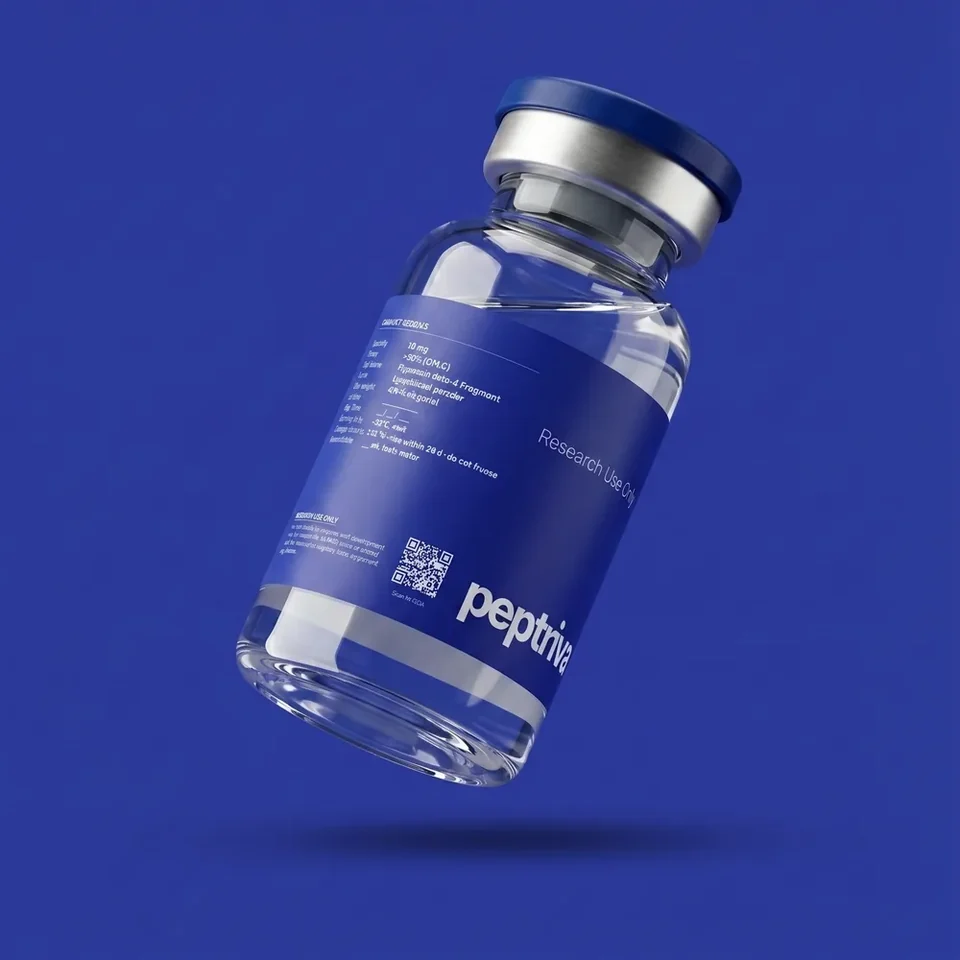
Thymosin α-1
The compound discussed here, supplied as a research compound with a certificate of analysis matched to the lot.
What the rest of the human record measured
Put every human dataset side by side and the shape gets clear fast.
| Study | Design | What it measured | Result |
|---|---|---|---|
| TESTS, The BMJ, 2025 | Phase III RCT, 1,106 patients | 28-day all-cause death | 23.4% vs 24.1%, P=0.93 |
| Hepatitis B/C programs | Basis for approval in 35+ countries | Virologic and liver markers | Approved abroad, not by FDA |
| Espinar-Buitrago, Immunity & Aging, 2023 | Immune response study, SARS-CoV-2 | T cell and immune cell markers | Mechanistic signals only |
| Liu & Lu, Frontiers in Immunology, 2023 | Narrative review, lung cancer | Mechanism plus mixed clinical reports | No definitive outcome trial |
| PRaG 5.0, BMJ Open, 2024 | Published protocol | Tumor response, safety | Results not yet reported |
| Energy, immunity, anti-aging claims | None | Nothing | Zero controlled trials |
The PRaG 5.0 entry matters for a specific reason. Kong and colleagues published the plan in BMJ Open in 2024. A protocol is a promise to measure something. It is not a measurement.
Does thymosin alpha-1 boost immunity in healthy people?
No trial has tested that. The studied populations are sick: sepsis, hepatitis, cancer, COVID-19. Healthy adults taking it for general immune support have zero controlled data behind them.
The mechanism work is genuinely interesting. Garaci and colleagues, writing in Frontiers in Medicine in 2024, describe a peptide studied across roughly three decades that acts on many targets at once rather than one receptor.
Thymosin alpha-1 acts on multiple targets, and its activity depends on the state of the host immune system rather than on a single pathway.
Garaci et al., Frontiers in Medicine, 2024That cuts both ways. A compound whose effect depends on the immune state of the person taking it is a compound whose effect in a healthy person is unknown. The TESTS subgroup split is what that looks like in practice.
More on what is and is not supported sits on the benefits page.
What you can actually verify before buying
If the outcome cannot be photographed, the only thing left to check is the vial. Research-grade material runs roughly $40-$80 per 10 mg vial across the market, and price tells you nothing about identity.
- A batch-matched certificate of analysis. Lot number on the paper, lot number on the vial. See how to read a COA.
- Mass spec identity, not just HPLC purity. Purity of the wrong molecule is still purity.
- Storage handling. Lyophilized peptides have temperature rules; the storage guide covers them.
- Legal status. It is approved in 35+ countries as thymalfasin, and not by FDA. The FDA status page explains the compounding angle.
A foreign approval is a fact about thymalfasin the drug product. It is not a fact about the vial in front of you.
Thymosin α-1
Third-party tested research compounds, each shipped with a batch-matched certificate of analysis showing HPLC purity and mass-spec identity — the documentation this site argues you should hold any supplier to.
What to know now
- The largest trial measured 1,106 sepsis patients and missed its endpoint, 23.4% vs 24.1%, P=0.93.
- Approved uses abroad are chronic hepatitis B and C, and the endpoints were lab values, not appearance.
- Subgroup results in TESTS leaned toward benefit in older patients and away from it in younger ones.
- No controlled trial has tested thymosin alpha-1 for energy, immunity or appearance in healthy adults.
- PRaG 5.0 in cancer is a published protocol only, with no results reported.
What we're watching
FDA's Pharmacy Compounding Advisory Committee activity in 2026. US access runs through compounding, and that status is under live review.
Frequently asked questions
Are there real thymosin alpha-1 before and after photos?
No. The studied outcomes are death rates, virus levels and immune cell markers. None of those show up in a photograph. Any image presented as a thymosin alpha-1 result is not tied to a published measurement.
How long did the trials run?
It depends on the setting. In chronic hepatitis, published programs ran up to 48 weeks with 1.6 mg given subcutaneously twice weekly. In the TESTS sepsis trial, dosing ran for about a week and the endpoint was death at 28 days. That is what was administered in studies, not a plan for anyone.
Did the sepsis trial show any benefit?
Not on its primary endpoint. Death at 28 days was 23.4% with thymosin alpha-1 and 24.1% with placebo, P=0.93. Subgroup analyses hinted at direction differences by age, including a signal toward worse outcomes in younger patients. Subgroups from a failed trial are not proof.
Is thymosin alpha-1 FDA approved?
No. It has no FDA approval for any indication. It is approved in more than 35 countries as thymalfasin for chronic hepatitis B and C, and it carries an EMA orphan designation in hepatocellular carcinoma. Foreign approval does not apply to a research vial.
What about COVID-19?
Espinar-Buitrago and colleagues published work in Immunity & Aging in 2023 on thymosin alpha-1 as an immunomodulator against SARS-CoV-2. It measured immune cell responses. It did not establish a clinical outcome benefit.
What about cancer?
Liu and Lu reviewed thymosin in lung cancer in Frontiers in Immunology in 2023, and the evidence is mechanism plus mixed clinical reports. The PRaG 5.0 study published in BMJ Open in 2024 is a protocol. Its results are not out.
What people actually report
These are self-reports, not evidence. No control group, no blinding, and no independent check that the vial held what the label claimed. They are collected here because people asking about Thymosin Alpha 1 deserve an answer rather than a refusal, and because what the community believes is itself worth knowing. Quotes are excerpts; each links to the original post.
Uncontrolled, unverified self-report, and it clusters in long COVID and ME/CFS forums rather than gyms. The repeated pattern is a pulse: people feel better a day or two after a shot, then slide back, and two of the commenters here say nothing accumulates. One post describes being back to 98 percent normal by day two or three. Another commenter reports feeling really sad for a few days. The dissent is blunt: an r/cfs poster says a single shot was followed by a three-week decline, from mild back to moderate.
Where the community and the published record disagree. The registry and the forums are not measuring the same thing. Searched on August 28, 2026, ClinicalTrials.gov returns 64 studies of thymalfasin, the drug name for thymosin alpha-1. They run in hepatitis B and C, sepsis, cancer, HIV and acute COVID. Not one lists long COVID or ME/CFS as a condition, and that is where nearly every self-report here comes from. Those trials read out over weeks to months, in people with a diagnosed infection, a cancer or a critical illness. The community's yardstick is a different one: how a person feels the morning after a shot.
“Didn't notice anything the first day but day 2-3 I am back to 98% normal again.”
“i kept declining and i am currently in week 3 after a single shot and i am currently back to moderate.”
“It’s been 6 weeks and it isn’t really doing much for me. I feel better the next day but no cumulative effects so far.”
Thymosin Alpha-1 (Tα1) has anyone seen any studies or has experience ? (comment)
“It doesn’t seem to have any lasting effects for me, but it does help during a flare or infection.”
Thymosin Alpha-1 (Tα1) has anyone seen any studies or has experience ? (comment)
“Anecdotally, it made me really sad for a few days. Didn’t get covid when the rest of my family did, so I suppose still a win.”
Anyone here tried Thymosin Alpha 1 (Thy-A1)? Looking to hear about your experience (comment)
“Thymosin Alpha 1 is my go-to peptide for staying healthy, especially during travel and flu season.”
Posts are quoted under fair use and linked to their authors. Nothing on this page is hosted here, and no claim above has been verified beyond confirming that the person wrote it.
References
- Wu, J., Pei, F., Zhou, L., et al. (2025). The efficacy and safety of thymosin α1 for sepsis (TESTS): multicentre, double blinded, randomised, placebo controlled, phase 3 trial. BMJ, 388, e082583. https://doi.org/10.1136/bmj-2024-082583
- Garaci, E., Paci, M., Matteucci, C., et al. (2024). Phenotypic drug discovery: A case for thymosin alpha-1. Frontiers in Medicine, 11, 1388959. https://doi.org/10.3389/fmed.2024.1388959
- Espinar-Buitrago, M. S., Tarancon-Diez, L., Vazquez-Alejo, E., et al. (2023). The use of alpha 1 thymosin as an immunomodulator of the response against SARS-Cov2. Immunity & Ageing, 20(1), 32. https://doi.org/10.1186/s12979-023-00351-x
- Kong, Y., Chen, R., Xu, M., et al. (2024). Evaluation of the efficacy and safety of a precise thymalfasin-regulated PRaG regimen for advanced refractory solid tumours: Protocol for the PRaG 5.0 study. BMJ Open, 14(3), e075642. https://doi.org/10.1136/bmjopen-2023-075642
- Liu, Y., & Lu, J. (2023). Mechanism and clinical application of thymosin in the treatment of lung cancer. Frontiers in Immunology, 14, 1237978. https://doi.org/10.3389/fimmu.2023.1237978