
Search thymosin alpha 1 benefits and you get a list: immunity, cancer, hepatitis, longevity, long COVID. Two of those items sit on approved labels in 35+ countries. The largest trial ever run on this peptide, published in The BMJ in 2025, missed its endpoint.
The short answer. Thymosin alpha-1 is approved in 35+ countries as thymalfasin for chronic hepatitis B and C, and for cancer support. The FDA has approved it for nothing.
- The TESTS phase 3 trial in The BMJ randomized 1,106 sepsis patients and found no mortality difference at 28 days (23.4% versus 24.1%, p=0.93).
- TESTS also reported a hazard ratio of 1.67 in younger patients, a signal the trial was not designed to resolve.
- The immune-boosting claim rests on mechanism papers, including Garaci 2024, which measure immune cells rather than patient outcomes.
Thymosin alpha-1 is a 28-amino-acid immune peptide. It is approved in 35+ countries as thymalfasin, not by FDA. The approved uses are chronic hepatitis B and C. Its largest trial tested sepsis and missed its endpoint. Death rates at 28 days were 23.4% and 24.1%. Most other benefit claims rest on lab mechanism alone.
What thymosin alpha 1 is actually approved to do
Thymosin alpha-1 is a synthetic 28-amino-acid peptide. Abroad it is sold as thymalfasin, also branded Zadaxin. It is approved in 35+ countries.
The approved indications are chronic hepatitis B, chronic hepatitis C, and cancer support. That is the full list of benefits any regulator has signed off on.
The United States is not one of those countries. FDA approval for thymosin alpha-1 stands at zero indications. US supply runs through compounding, which is covered in the FDA approval status page.
The hepatitis work that built those approvals gave 1.6 mg under the skin, twice a week, for up to 48 weeks. That is a report of what trials administered, not a recommendation. The dosage page lists each regimen by study.
An approval abroad is a claim about one disease, one product and one label. It does not transfer to a research vial, and it does not transfer to a healthy person looking for an immune boost.
Does thymosin alpha 1 boost the immune system?
This is the claim that sells vials, and it is the one with the least outcome data. What exists is mechanism.
Garaci and colleagues, writing in Frontiers in Medicine in 2024, make the case for thymosin alpha-1 as a phenotypic drug. Their argument is that it does not have one target. It touches toll-like receptor signaling, dendritic cell maturation and T cell behavior at once, so the effect depends on the state of the host.
Thymosin alpha-1 behaves as a multitasking molecule, and its activity depends on the biological context in which it acts.
Garaci et al., Frontiers in Medicine, 2024Espinar-Buitrago and colleagues, in Immunity & Aging in 2023, studied the same idea against SARS-CoV-2. They looked at how thymosin alpha-1 modulates the immune response. That is a measurement of immune cells, not a measurement of whether people got better.
- What these papers measure: receptor signaling, cell populations, cytokine patterns.
- What they do not measure: infections avoided, days of illness, symptom scores in healthy adults.
- Why it matters: "immune boosting" is not an endpoint. No regulator accepts it, because nobody can define it.
So the honest reading is this. Thymosin alpha-1 clearly does something to immune cells. Whether that something helps a person with no diagnosed disease has not been tested in a controlled trial we can find.
The sepsis trial: the biggest test it has had
In 2025 The BMJ published TESTS, by Wu, Pei, Zhou and colleagues. It was multicentre, double blinded, randomized, placebo controlled and phase 3. In this market, that combination almost never happens.
It enrolled 1,106 sepsis patients, with 552 assigned to thymosin alpha-1. The primary endpoint was all-cause death at 28 days.
The two arms came in at 23.4% and 24.1%. The p value was 0.93. That is not a small benefit. It is no separation at all.
Thymosin alpha-1 did not reduce 28-day all-cause mortality in adults with sepsis.
Wu et al., TESTS trial, The BMJ, 2025The subgroup numbers are the uncomfortable part. The report gives a hazard ratio of 1.67 at the younger end and 0.58 at the older end. A trial that misses its primary endpoint cannot settle a subgroup, but a point estimate above 1 is a signal pointing the wrong way.
Sepsis is the setting where the immune-modulation story should have paid off most visibly. It was tested properly and it did not. Any benefit list that skips this trial is selling, not reporting. The complete guide covers the trial design in full.
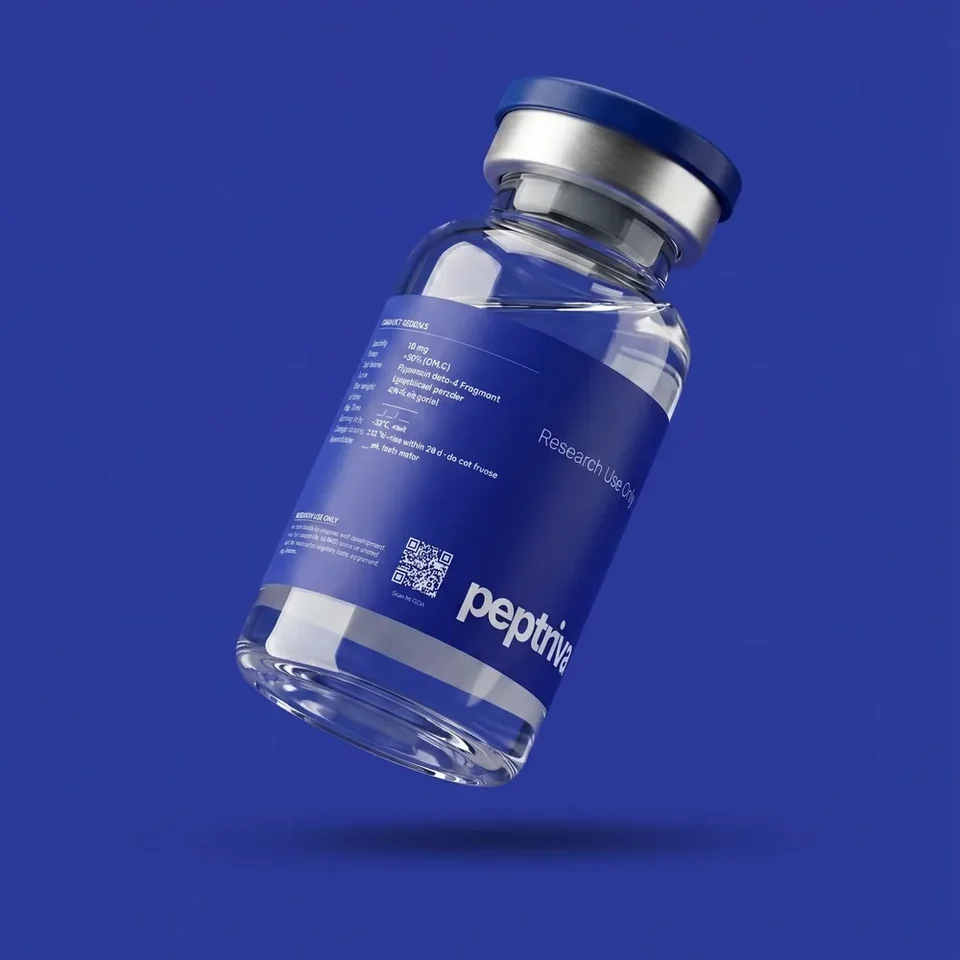
Thymosin α-1
The compound discussed here, supplied as a research compound with a certificate of analysis matched to the lot.
What about the cancer benefits?
Cancer support sits on thymalfasin labels abroad, so this is not a fringe claim. It is also where the evidence gets thinnest once you open the papers.
Liu and Lu published a 2023 review in Frontiers in Immunology on thymosin in lung cancer. It covers mechanism and clinical application together. It is a narrative review, not a randomized trial, and a review inherits the quality of whatever it reviews.
The forward-looking item is PRaG 5.0. Kong and colleagues published the protocol in BMJ Open in 2024: a thymalfasin-regulated regimen for advanced refractory solid tumors. A protocol is a plan to collect data.
That distinction is the whole section. A published protocol tells you a question is being asked carefully. It does not tell you the answer. When the PRaG results arrive, they will be the first thing worth reading here.
The EMA orphan designation for hepatocellular carcinoma works the same way. Designation is a regulatory status that encourages development. It is not a finding of benefit.
The benefits with no trial behind them
Several claims circulate with nothing underneath. Naming them is more useful than ignoring them.
- Anti-aging and longevity. No controlled human outcome trial we could locate.
- Long COVID recovery. The 2023 Immunity & Aging work measured immune responses in SARS-CoV-2, not long-term symptom outcomes.
- Chronic Lyme and other chronic infections. No controlled trial we could locate.
- Autoimmune conditions. Mechanism papers cut both ways here; outcome data is absent.
- Athletic recovery. Nothing. Thymosin alpha-1 shares only a name with Thymosin Beta-4, and the two are different molecules with different literatures.
That last confusion is common enough to be worth repeating. If a page lists tissue repair under thymosin alpha-1 benefits, it has merged two peptides.
Every claim, traced back to its source
| Claim | Best evidence available | What that evidence is |
|---|---|---|
| Chronic hepatitis B and C | Registration data behind approvals in 35+ countries | Approved label abroad; no FDA approval |
| Sepsis survival | TESTS, 1,106 patients, BMJ 2025 | Phase 3, missed endpoint, p=0.93 |
| Lung cancer support | Liu & Lu, Frontiers in Immunology 2023 | Narrative review, not a trial |
| Advanced solid tumors | PRaG 5.0, BMJ Open 2024 | Study protocol, no results yet |
| COVID immune response | Espinar-Buitrago, Immunity & Aging 2023 | Immune measurements, not outcomes |
| General immune boosting | Garaci, Frontiers in Medicine 2024 | Mechanism argument, no outcome endpoint |
| Anti-aging, Lyme, recovery | None found | No controlled human data |
Research-grade vials commonly run $40-$80 per 10 mg vial. If you are evaluating one, the documents matter more than the benefit list: see how to read a certificate of analysis, storage temperature, and the legal status of peptides.
Thymosin α-1
Third-party tested research compounds, each shipped with a batch-matched certificate of analysis showing HPLC purity and mass-spec identity — the documentation this site argues you should hold any supplier to.
What to know now
- Thymosin alpha-1 is approved in 35+ countries as thymalfasin for chronic hepatitis B and C, and for cancer support. The FDA has approved it for nothing.
- The TESTS phase 3 trial in The BMJ randomized 1,106 sepsis patients and found no mortality difference at 28 days (23.4% versus 24.1%, p=0.93).
- TESTS also reported a hazard ratio of 1.67 in younger patients, a signal the trial was not designed to resolve.
- The immune-boosting claim rests on mechanism papers, including Garaci 2024, which measure immune cells rather than patient outcomes.
- PRaG 5.0 in BMJ Open is a protocol, not a result. The cancer combination question is still open.
What we're watching
thymosin alpha 1 mechanism of action and the 2025 BMJ sepsis trial
Frequently asked questions
Is thymosin alpha 1 FDA approved?
No. It has no FDA approval for any indication. It is approved abroad as thymalfasin in 35+ countries, and US access runs through compounding. Details are on the FDA approval status page.
What did the 2025 sepsis trial find?
TESTS, published in The BMJ, randomized 1,106 sepsis patients. All-cause death at 28 days was 23.4% in one arm and 24.1% in the other, with a p value of 0.93. The trial missed its primary endpoint.
Does thymosin alpha 1 help with COVID?
The strongest work we can point to is Espinar-Buitrago and colleagues in Immunity & Aging, 2023. They measured how the peptide modulates the immune response to SARS-CoV-2. That is mechanism, not a controlled outcome trial.
What doses did the published trials use?
Chronic hepatitis programs administered 1.6 mg under the skin twice a week for up to 48 weeks. The sepsis trial used a short course in critically ill patients. These are reports of what studies gave, not instructions.
Is thymosin alpha 1 the same as TB-500?
No. Thymosin alpha-1 is a 28-amino-acid immune peptide. Thymosin Beta-4, sold as TB-500, is a different molecule with a different literature. They share a family name and nothing else.
How much does thymosin alpha 1 cost?
Research vials commonly list around $40 to $80 per 10 mg vial. Price tells you nothing about identity or purity; a batch-specific certificate of analysis does.
References
- Wu, J., Pei, F., Zhou, L., et al. (2025). The efficacy and safety of thymosin α1 for sepsis (TESTS): multicentre, double blinded, randomised, placebo controlled, phase 3 trial. BMJ, 388, e082583. https://doi.org/10.1136/bmj-2024-082583
- Garaci, E., Paci, M., Matteucci, C., et al. (2024). Phenotypic drug discovery: A case for thymosin alpha-1. Frontiers in Medicine, 11, 1388959. https://doi.org/10.3389/fmed.2024.1388959
- Espinar-Buitrago, M. S., Tarancon-Diez, L., Vazquez-Alejo, E., et al. (2023). The use of alpha 1 thymosin as an immunomodulator of the response against SARS-Cov2. Immunity & Ageing, 20(1), 32. https://doi.org/10.1186/s12979-023-00351-x
- Kong, Y., Chen, R., Xu, M., et al. (2024). Evaluation of the efficacy and safety of a precise thymalfasin-regulated PRaG regimen for advanced refractory solid tumours: Protocol for the PRaG 5.0 study. BMJ Open, 14(3), e075642. https://doi.org/10.1136/bmjopen-2023-075642
- Liu, Y., & Lu, J. (2023). Mechanism and clinical application of thymosin in the treatment of lung cancer. Frontiers in Immunology, 14, 1237978. https://doi.org/10.3389/fimmu.2023.1237978