
A vial price alone tells you almost nothing. The same 10 mg of BPC-157 costs anywhere from about $65 to $100 depending on the vendor, and a smaller vial at a lower sticker price can cost more per milligram than a larger one that looks more expensive.
The short answer. Compare price per milligram, computed only where the vial size is confirmed. A lower sticker price on a smaller vial is often the more expensive option.
- Oath Research was the only vendor cheapest on more than one compound in this set (NAD+ and, on the “from” price shown, MOTS-c), and undercuts the others on BPC-157 as well.
- BioLongevity Labs carried the highest list price on every compound compared here, partly offset by a sitewide 40%-off promotion running at the time of this check.
- Oath Research's NAD+ price works out to $0.15 per milligram, the cheapest figure in the whole comparison; BioLongevity Labs' TB-500 price works out to $16.50 per milligram, the most expensive.
Compare price per milligram, not per vial, and check the vial size behind every “from” price before treating it as comparable. The tables below were checked on 2026-09-29 and mark every figure that is a starting price, an inferred estimate, or simply not disclosed.
Why compare price per milligram, not per vial
Research peptide vendors sell the same compound in different vial sizes, so a sticker price by itself is not a fair comparison. A $60 vial that holds 5 mg is $12.00 per milligram; a $70 vial that holds 10 mg is $7.00 per milligram: the second is cheaper even though its price tag is higher.
Dividing price by milligrams only works when the vial size is known. Several vendors advertise a “from” price on their homepage or category page without stating which size it applies to. The tables below show every figure exactly as published, mark the ones with an unconfirmed vial size, and compute a per-milligram figure only where the size is stated.
Prices across eight research peptides, checked 2026-09-29
| Vendor | BPC-157 10 mg |
TB-500 10 mg |
GHK-Cu 50 mg |
NAD+ 500 mg |
CJC-1295/ Ipamorelin |
MOTS-c 10 mg |
KPV 10 mg |
GLOW blend ≈70 mg |
|---|---|---|---|---|---|---|---|---|
| American Peptides | $60.00† (5 mg) | $100.00 ($10.00/mg) | $50.00 from‡ | $100.00 from‡ | $90.00 from‡§ | $100.00 from‡ | $60.00 ($6.00/mg) | $150.00 ($2.14/mg) |
| Oath Research | $65.00 ($6.50/mg) | $90.00 ($9.00/mg) | $50.00 from‡ (reg. $55) | $75.00 ($0.15/mg) | $90.00 from‡§ (reg. $140) | $60.00 from‡ (reg. $75) | $65.00 ($6.50/mg) | $135.00 ($1.93/mg) (reg. $175) |
| Core Peptides | $92.00 ($9.20/mg) | $124.00 ($12.40/mg) | $64.00 ($1.28/mg) | $179.00‖ | $81.00 ($8.10/mg)§ | $99.00 ($9.90/mg) | $39.00¶ (4 mg) | $205.00 ($2.93/mg) |
| Biotech Peptides | $92.00‖ (5 mg $52) | $140.00‖ | $58.00 ($1.16/mg) (reg. $69) | not offered at 500 mg# | $80.00 ($8.00/mg)§ | $116.00 ($11.60/mg) | $38.00¶ (4 mg) | $150.00 ($2.14/mg) |
| BioLongevity Labs | $99.97 ($10.00/mg)Σ | $164.97 ($16.50/mg) | $84.97 ($1.70/mg) | $249.97 ($0.50/mg) | $99.97 ($10.00/mg)§ | $109.97 ($11.00/mg) | $99.97 ($10.00/mg) | $259.97 ($3.71/mg) |
| Lone Star Peptide Co. | Prices render client-side and were not disclosed without adding an item to a cart. The homepage cites “from $79” as a general starting price. | |||||||
Checked 2026-09-29, from each vendor’s own public pages and product APIs. † American Peptides does not list a 10 mg BPC-157 size; its 5 mg price is shown for reference and is not directly comparable to the 10 mg basis used for the other rows. ‡ Shown as the vendor’s lowest listed (“from”) price; the exact vial size at that price was not confirmed and may be smaller than the column’s comparison basis. § CJC-1295/Ipamorelin blend ratios are vendor-specific and were not confirmed identical across sellers, even where the total vial size matches. ‖ Inferred from a vendor-listed size range rather than read directly off a single SKU. ¶ 4 mg vial, not directly comparable to a 10 mg vial. # Biotech Peptides’ smallest and largest NAD+ sizes (100–750 mg) run $47–$292; no 500 mg option is listed. Σ BioLongevity Labs was running a sitewide 40%-off promotion at check time; list price is shown, with the promotional price roughly 60% of it while the sale runs.
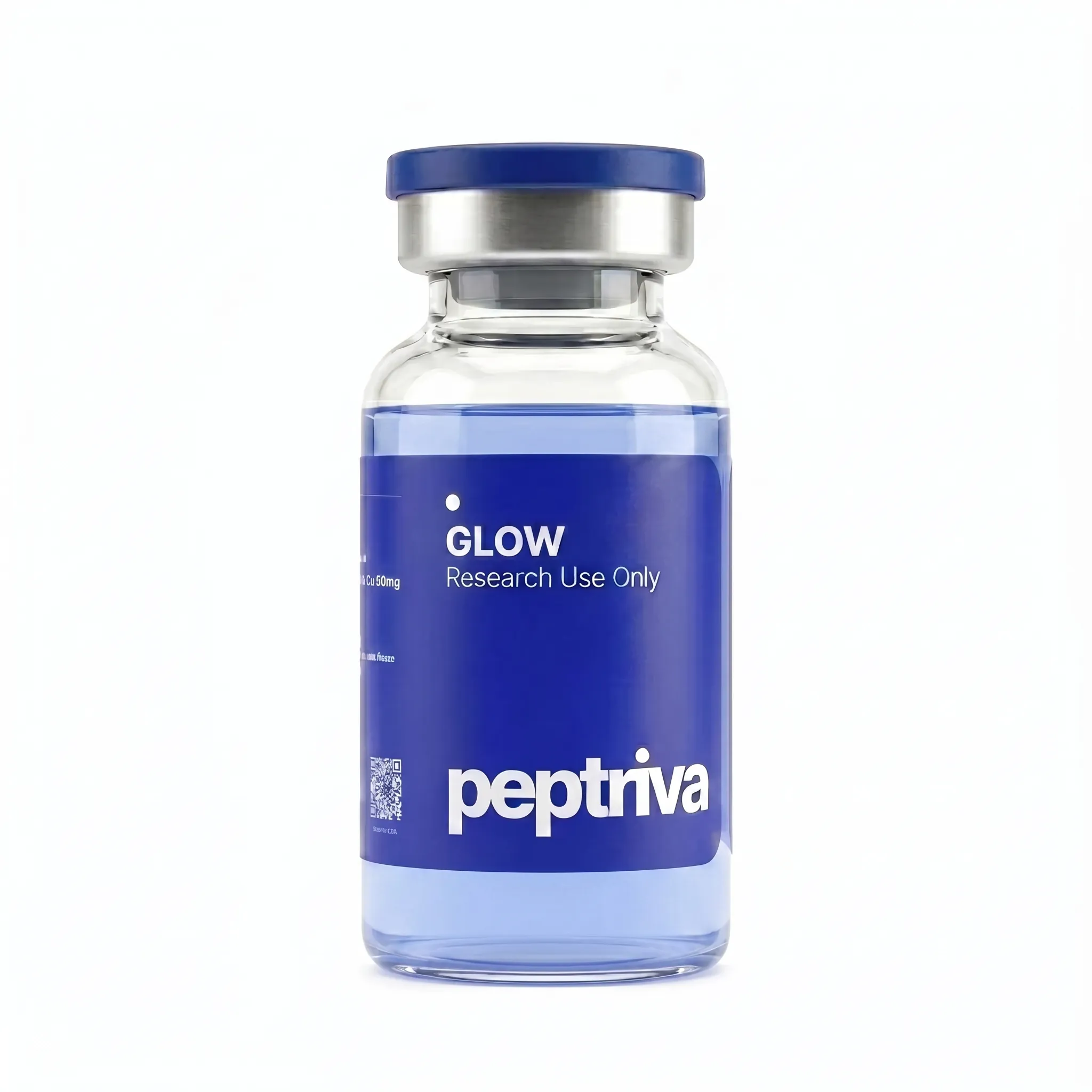
GLOW Blend
BPC-157, TB-500 and GHK-Cu combined in a single 70 mg vial, with a batch-matched certificate of analysis and free shipping on every order, no minimum.
Free-shipping thresholds and same-day cutoffs
The vial price is not the landed cost. A vendor with a lower sticker price and a $400 free-shipping minimum can cost more on a single-vial order than one with a higher sticker price and no minimum at all.
| Vendor | Free shipping at | Same-day cutoff |
|---|---|---|
| American Peptides | $300 | 2:00 pm ET |
| Oath Research | $250 | Same-day (exact cutoff not published; site cites a 2-day transit option) |
| Core Peptides | $200 | 1:00 pm PT (4:00 pm ET) |
| Biotech Peptides | Not stated on the pages checked | 1:00 pm PT |
| BioLongevity Labs | $400 | 12:00 pm PT |
| Lone Star Peptide Co. | Not stated on the pages checked | 3:00 pm CT |
What the price alone does not tell you
None of the figures above say anything about what gets tested, who tests it, or whether the certificate you receive is matched to the lot in your hand. Research peptide suppliers compared covers testing disclosure, payment methods, account requirements and first-order offers for the same six vendors, and how to read a certificate of analysis covers what a real one should contain.
GLOW Blend
Research-use-only material, sold by the vial with batch documentation. Check the certificate of analysis against the batch you receive.
What to know now
- Compare price per milligram, computed only where the vial size is confirmed. A lower sticker price on a smaller vial is often the more expensive option.
- Oath Research was the only vendor cheapest on more than one compound in this set (NAD+ and, on the “from” price shown, MOTS-c), and undercuts the others on BPC-157 as well.
- BioLongevity Labs carried the highest list price on every compound compared here, partly offset by a sitewide 40%-off promotion running at the time of this check.
- Oath Research's NAD+ price works out to $0.15 per milligram, the cheapest figure in the whole comparison; BioLongevity Labs' TB-500 price works out to $16.50 per milligram, the most expensive.
- Lone Star Peptide Co. does not render a price for any of these eight compounds without adding the item to a cart first.
- Core Peptides and Biotech Peptides sell KPV only in a 4 mg vial in this set; the other four vendors compared here sell a 10 mg size.
- Blend ratios for CJC-1295/Ipamorelin and GLOW-style products are vendor-specific and were not confirmed identical across sellers, even at a matching total milligram count.
What we're watching
Vendor pricing changes without notice, and at least one seller in this set was running a storewide discount at the time of this check. Treat this table as a dated snapshot rather than a live feed, and confirm a vendor's current price on its own site before ordering.
Frequently asked questions
Why do research peptide prices vary so much between vendors?
Synthesis cost, purity target, testing regimen and margin all move independently, and vial size differs by vendor as well. A price comparison that ignores vial size is not really comparing anything.
Is a cheaper peptide vial automatically a lower-quality one?
Not automatically, but price alone does not answer the question. What differs more reliably between a cheap and an expensive vial is whether the vendor names its testing lab and publishes a certificate matched to the lot, which price does not disclose either way.
What does a "from" price mean on a vendor's site?
It is the vendor's lowest listed price for that product line, usually its smallest vial size. Several vendors in this comparison show a "from" price without stating the exact size it applies to, which is why those cells are marked rather than converted to a per-milligram figure.
Does a smaller vial always cost more per milligram?
In this data set, yes, in every case where a vendor sold both a smaller and a larger size of the same compound. It is not a law of chemistry, just a common pricing pattern worth checking before assuming a lower sticker price is the better deal.
References
- Verlander, M. (2007). Industrial applications of solid-phase peptide synthesis — a status report. International Journal of Peptide Research and Therapeutics, 13(1–2), 75–82. https://doi.org/10.1007/s10989-006-9075-7
- International Organization for Standardization. (2017). ISO/IEC 17025:2017 — General requirements for the competence of testing and calibration laboratories. https://www.iso.org/standard/66912.html
- European Pharmacopoeia. (2023). Monograph 2.2.29: Liquid chromatography. Ph. Eur. 11.0. https://doi.org/10.1007/978-3-211-89836-9_515