
The short answer. BPC-157 — gastric-origin pentadecapeptide with ~21 GI-indication preclinical studies.
- Best mechanism for IBD anti-inflammation: KPV — reproducible TNF-α and IL-6 suppression in colitis models.
- Best route for redox support: oral NAC, the GSH precursor — cleaner pharmacokinetics than oral GSH.
- Zero Western RCTs: no PubMed-indexed Western RCTs for IBD outcomes with any peptide here in 2020-2026.
If you're picking the best peptides for gut health, BPC-157 leads on the depth of its preclinical literature. KPV is a distant second, on limited but reproducible work. Glutathione comes third, and the intravenous route is the one you'll want to skip.
BPC-157 is a 15-amino-acid peptide. It was isolated from human stomach juice. It has the deepest gut-repair data here. Tests cover NSAID damage. Tests cover IBD models. Tests cover intestinal permeability. But none of these peptides has a Western RCT for IBD outcomes. Standard FDA-approved IBD drugs still win on evidence.
The gut is unusual real estate. Your intestinal lining turns over every 3-5 days, the fastest of any tissue in your body. That makes it a natural target for repair peptides.
The gut mucosa also hosts your largest immune compartment. That's why we keep seeing anti-inflammatory peptides show up in inflammatory-bowel-disease research.
BPC-157's biology is especially resonant here. It was originally isolated from human gastric juice, where researchers believe it helps maintain the GI barrier. You're putting back something your stomach already makes.
We've read across the gut-specific peptide evidence. A 2024 review in Inflammopharmacology summarizes the broader BPC-157 GI-protective work (Sikiric et al., 2024). A 2025 HSS Journal systematic review aggregated 36 studies including GI indications (Vasireddi et al., 2025). A 2023 review in Cells positions KPV within the melanocortin-IBD literature (Gravina et al., 2023). Here's the honest 2026 ranking.
How gut-health peptides actually work
We see three mechanism families dominate. Barrier-function support means restoring the tight junctions that hold your gut wall together. BPC-157 does this through effects on intestinal permeability.
Anti-inflammatory modulation means quieting the immune-signaling chemicals that drive IBD symptoms. Those chemicals are TNF-α and IL-6. KPV is built around this.
Redox support means feeding your gut's antioxidant defenses. Glutathione is the master intracellular antioxidant. It is also a cofactor for the enzyme that protects your mucosa from oxidative damage.
A 2020 paper showed BPC-157 rescued NSAID-induced gut damage by stabilizing permeability and enhancing cell protection (Park et al., 2020). A 2025 hydrogel study found GHK-Cu cut disease activity in DSS colitis and restored tight-junction proteins (ZO-1, Occludin) (Mao et al., 2025). A 2021 KPV hydrogel reduced TNBS-induced colitis disease activity in rats (Sun et al., 2021).
"
Peptides for gut health have preclinical mechanism interest but no PubMed-indexed Western RCTs in 2020-2026 supporting clinical IBD outcomes. FDA-approved therapies have substantially stronger evidence.
Three compounds carry the gut-specific evidence. Here is how they line up before we take each in turn.
| Compound | Mechanism | Best human evidence | Status | The catch |
|---|---|---|---|---|
| BPC-157 | 15-amino-acid peptide isolated from human gastric juice; barrier-function support through effects on intestinal permeability | One published human study — a 17-patient retrospective case series for knee pain, not GI use. A 2024 interstitial cystitis pilot in 12 women was uncontrolled | WADA-prohibited under S0 since January 2022. FDA Category 2 compounding flag (2023) | Zero RCTs for IBD or any gut indication, and roughly 80% of the preclinical work comes from one Zagreb research group (Sikiric) — an authorship concentration the field has flagged |
| KPV | Lys-Pro-Val, the last three amino acids of α-MSH; anti-inflammatory modulation, dropping TNF-α and IL-6 without the pigment-darkening effect of the full hormone | Not established — zero RCTs for IBD or any indication; the reproducible work is TNBS and DSS colitis models in rats | Not established | Among the thinnest evidence bases in the catalog — only 4 PubMed results in 2020-2026 engage KPV biology directly, and grey-market injectable pharmacokinetics are uncharacterized |
| Glutathione | The master intracellular antioxidant tripeptide; redox support as a cofactor for the enzyme that protects the mucosa from oxidative damage | Not established — zero RCTs of glutathione for IBD outcomes in 2020-2026, though mucosal GSH depletion in active IBD is documented | FDA has warned against unapproved IV glutathione. The precursor NAC is FDA-approved for acetaminophen overdose and as a mucolytic | Oral bioavailability is poor — gut enzymes break GSH down to amino acids before it can act — and it functions as a redox cofactor, not a signaling peptide |
1. BPC-157: the gastric-origin pentadecapeptide
If you only try one peptide from this list, BPC-157 is our pick. We rank it first by a meaningful margin. Its evidence base was built around GI indications from the start, because the peptide itself came from the GI tract.
The name "Body Protection Compound" reflects its proposed role in maintaining GI barrier integrity. The 2025 HSS Journal systematic review aggregated 35 preclinical studies across muscle, tendon, ligament, bone, and GI indications. The gut-specific work covers NSAID damage, IBD, anastomosis healing (surgical reconnection of intestine), and intestinal permeability.
The most-cited GI work covers four areas. NSAID damage: intestinal permeability normalized after BPC-157 in rats (Park et al., 2020). IBD models: reduced disease activity in TNBS and DSS colitis.
Distant-organ protection: BPC-157 protected liver, kidney, and lung from ischemia-reperfusion injury (damage from blood-flow loss then return) (Demirtas et al., 2025). Gut-brain axis: a 2024 paper discusses pleiotropic activity and neurotransmitter pathways (Sikiric et al., 2024).
- Typical protocol: 250–500 mcg/day subcutaneous, or oral capsules at higher doses.
- Cycle length: 4–6 weeks. These protocols are grey-market consensus, not validated in human RCTs.
- Route notes: oral absorption is sufficient for gut-luminal effects in the rodent NSAID studies.
Strengths. Deepest preclinical GI evidence in the category. The gastric-origin biology is internally consistent. Reproducible signal across NSAID damage, IBD, anastomosis, and permeability. The 2024 Inflammopharmacology review aggregates the broader picture.
Where this falls short. One published human study, a 17-patient retrospective case series for knee pain. Not GI use. A 2024 interstitial cystitis pilot in 12 women suggested broader anti-inflammatory effects but was uncontrolled. Zero RCTs for IBD or any gut indication. Roughly 80% of the preclinical work comes from one Zagreb research group (Sikiric), which is an authorship concentration the field has flagged. WADA-prohibited under S0 since January 2022. FDA Category 2 compounding flag (2023).
2. KPV: the small anti-inflammatory tripeptide
KPV (Lys-Pro-Val) is the last three amino acids of α-MSH, a natural hormone. It keeps the parent hormone's anti-inflammatory action without the pigment-darkening side effect you'd get from full α-MSH.
We rank it second because IBD is the most-developed research area for KPV. The whole melanocortin-pathway interest in IBD has driven most recent work.
A 2021 study built a hydrogel to stabilize KPV against rapid enzyme breakdown (Sun et al., 2021). In TNBS-induced ulcerative colitis rats, that hydrogel cut disease activity, prevented colon shortening, reduced myeloperoxidase (an inflammation marker), restored epithelial structure, and dropped TNF-α and IL-6.
A 2023 review in Cells positions KPV alongside ACTH, α-MSH, β-MSH, and KdPT in the broader melanocortin-IBD picture.
- Typical protocol: 250–500 mcg oral or subcutaneous.
- Route notes: oral or rectal favored for direct gut contact. Injectable for systemic anti-inflammatory effect.
- Pharmacokinetic challenge: rapid enzyme breakdown. Stabilized formulations like hydrogels are preferred over bare peptide.
Strengths. Mechanistically distinct from BPC-157. Small enough to enter cells directly. Reproducible TNF-α and IL-6 suppression in colitis models. The 2021 Sun hydrogel approach addresses the breakdown problem.
Limitations. Among the thinnest evidence bases in the peptide catalog. Only 4 PubMed results in 2020-2026 directly engage with KPV biology. Zero RCTs for IBD or any indication. Bare peptide has uncertain pharmacokinetics. Grey-market injectable KPV pharmacokinetics are uncharacterized.
3. Glutathione: intestinal redox cofactor
Glutathione (GSH) is a tripeptide, but it doesn't really function as a signaling peptide. It's your body's master intracellular antioxidant.
The gut-health angle is real. Your intestinal mucosal glutathione is depleted in active IBD. Restoring redox balance is a longstanding therapeutic concept.
The pharmacokinetic problem is also real. Gut enzymes break down oral GSH to constituent amino acids before it can act. Your body then rebuilds GSH from cysteine, glutamate, and glycine. Cysteine is the rate-limiting ingredient, so we point readers at the precursor instead.
That's why N-acetylcysteine (NAC) is the practical precursor. NAC is FDA-approved for acetaminophen overdose and as a mucolytic. It's been studied in IBD without strong RCT support for IBD-specific outcomes.
- Oral GSH: 250–500 mg twice daily. Bioavailability limited by gut enzymes.
- NAC precursor: 600–1200 mg/day oral. Better intracellular GSH restoration than oral GSH.
- IV: not recommended for gut-health use. FDA has warned against unapproved IV glutathione.
Strengths. Real cellular redox biology with well-characterized intracellular function. Mucosal GSH depletion in active IBD is documented. NAC is FDA-approved and has cleaner pharmacokinetics than oral GSH.
Limitations. Oral GSH bioavailability is poor. IV GSH has FDA warnings against unapproved use. Zero RCTs of glutathione for IBD outcomes in 2020-2026. The compound functions as a redox cofactor, not a signaling peptide. For genuine intestinal redox issues, NAC under medical supervision is the more evidence-supported path.
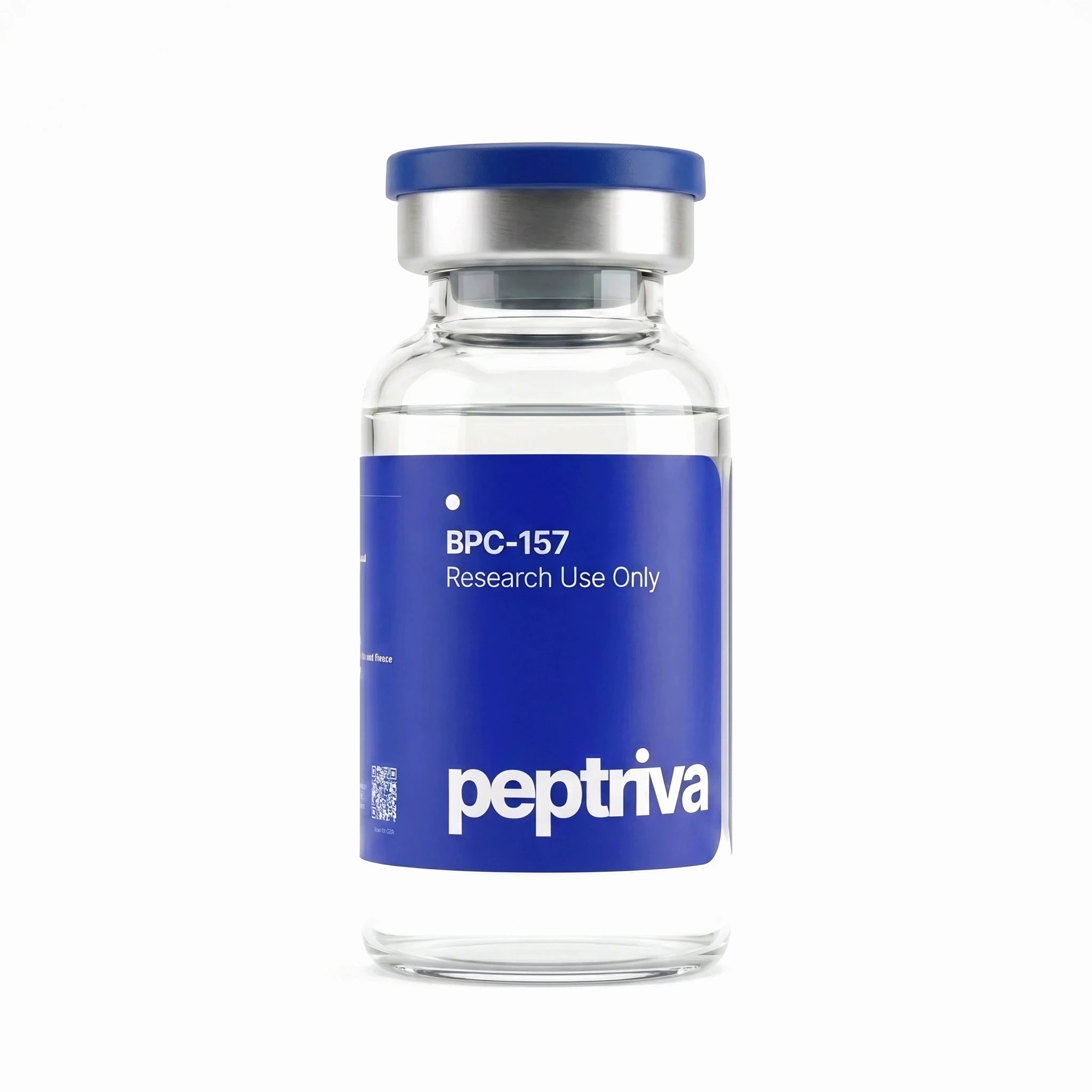
BPC-157
Tissue Repair / GIThe same compound cited across the GI-indication preclinical studies in this review. Lab-verified identity and purity.
Adjacent / support peptides
Thymosin Alpha 1: the immune-mediated gut option
Thymosin Alpha 1 (Tα1, Zadaxin) is approved in 35+ countries for hepatitis B/C and immune-adjunct use. It's the most clinically validated peptide outside the FDA-approved set.
The gut use case is mucosal immune modulation in immunosenescence (age-related immune decline) or post-illness recovery. A 2024 review in Frontiers in Medicine positions Tα1 as a broadly immunomodulatory peptide working through systems-level engagement (Garaci et al., 2024).
A 2025 BMJ Phase III sepsis trial (TESTS) in 1,106 patients was negative on the primary mortality endpoint (Wu et al., 2025). That's a notable null result for the field's biggest recent trial.
GHK-Cu: the 2025 DSS-colitis preclinical data
GHK-Cu's 2025 ulcerative-colitis study is the most recent peptide-IBD preclinical work. Mao and colleagues showed GHK-Cu cut disease activity, attenuated inflammatory damage, increased goblet cells (mucus-producing cells), suppressed inflammatory cytokines, and promoted mucosal repair through the SIRT1/STAT3 pathway.
STAT3 silencing experiments confirmed the pathway is central. The systemic gut use of GHK-Cu is still preliminary. Topical and cosmetic use is the established route. But the colitis mechanism work expands the broader anti-inflammatory case.
Optimal stacking protocols
The barrier-repair protocol
BPC-157 at 250–500 mcg/day (oral or subcutaneous) for 4–6 weeks. Pair with adequate protein intake (amino-acid substrate for mucosal repair) and removing irritants like NSAIDs, excessive alcohol, and identified food triggers.
The peptide does the cellular repair work. Lifestyle adjuncts handle the substrate and the upstream irritation. No combination RCTs validate this. It's grey-market consensus.
The anti-inflammatory protocol
KPV in a stabilized formulation, like a hydrogel-based oral or rectal delivery rather than bare peptide. The melanocortin anti-inflammatory effect addresses TNF-α and IL-6 mechanistically.
No human RCTs validate this for IBD outcomes. Standard FDA-approved IBD therapies have substantially stronger evidence.
The redox-support protocol
NAC (the practical glutathione precursor) at 600–1200 mg/day oral, paired with adequate selenium intake. Selenium is a cofactor for glutathione peroxidase.
NAC is FDA-approved for non-IBD indications. It has cleaner pharmacokinetics than oral GSH. If you have active IBD, this isn't a replacement for FDA-approved IBD therapy.
Training, nutrition, and lifestyle considerations
Your gut responds to nutrition and lifestyle with stronger evidence than any peptide here. Adequate fiber (typically 25-35 g/day) supports microbiome diversity and short-chain fatty acid production. Adequate protein supports mucosal repair. Avoiding identified food triggers, careful NSAID use, and managing stress-driven autonomic dysfunction all have evidence for GI outcomes.
Standard medical workup matters for persistent GI symptoms. The differential diagnosis (IBS, IBD, celiac, SIBO, gastritis, ulcer, malignancy) determines the right intervention. We don't endorse peptide self-treatment without a diagnosis. Using BPC-157 for chronic symptoms that turn out to be undiagnosed celiac means you've delayed the actual fix.
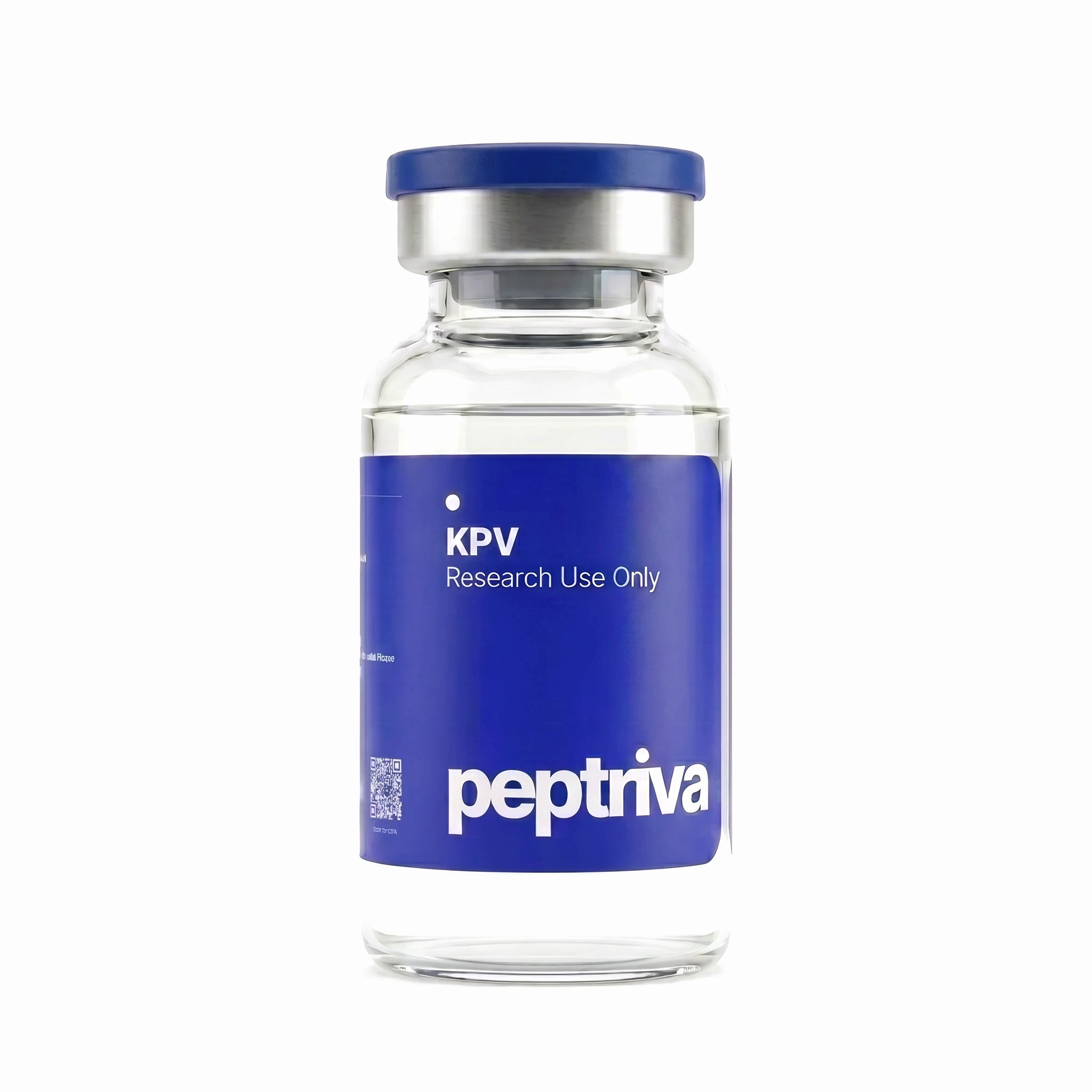
KPV
Anti-inflammatory / MelanocortinThree-residue C-terminus of α-MSH retaining anti-inflammatory activity without pigmentary effects. The same reference compound used across the cited TNBS-colitis hydrogel studies. COA available with each lot.
Safety, monitoring, and legal status
Required monitoring
If you have active GI symptoms, get a standard medical workup with differential diagnosis before peptide use. The baseline we'd want to see includes inflammatory markers (CRP, fecal calprotectin), nutritional status (iron, B12, vitamin D, folate), and any indicated endoscopic or imaging evaluation.
During peptide protocols, symptom tracking with validated GI tools gives you the cleanest measure of whether peptide use coincides with improvement. Use the IBDQ for IBD. Use the Bristol Stool Scale and validated IBS questionnaires for IBS.
"
For active IBD, peptide use is not a replacement for standard care. FDA-approved therapies have rigorous evidence bases that peptide self-treatment does not approach.
Known risks
For BPC-157, we'd flag manufacturing variance and product-identity uncertainty in grey-market channels. The molecule sold by research vendors may not match the compounds used in published research. Zagreb-group authorship concentration is a methodological caveat we keep highlighting.
For KPV, rapid enzyme breakdown creates pharmacokinetic uncertainty in bare-peptide formulations. For glutathione, IV-route warnings apply across all off-label use. Oral bioavailability is poor.
For all peptides here, the absence of human RCTs for IBD outcomes means treating active IBD with peptides instead of FDA-approved therapy delays appropriate care.
Legal and regulatory
BPC-157: not FDA-approved. FDA Category 2 compounding flag (2023). WADA-prohibited under S0 since January 2022. KPV: not FDA-approved. Not explicitly WADA-listed.
Glutathione: oral GSH and NAC are dietary supplements. NAC is FDA-approved for acetaminophen overdose. IV GSH has FDA warnings against unapproved use. Thymosin Alpha 1: approved in 35+ countries. Not FDA-approved in the US. GHK-Cu: not approved as a therapeutic. Used as a cosmetic ingredient.
What to know now
- Deepest GI evidence: BPC-157 — gastric-origin pentadecapeptide with ~21 GI-indication preclinical studies.
- Best mechanism for IBD anti-inflammation: KPV — reproducible TNF-α and IL-6 suppression in colitis models.
- Best route for redox support: oral NAC, the GSH precursor — cleaner pharmacokinetics than oral GSH.
- Zero Western RCTs: no PubMed-indexed Western RCTs for IBD outcomes with any peptide here in 2020-2026.
- Standard care first: FDA-approved IBD therapies (5-ASAs, biologics, JAK inhibitors) outweigh any peptide on evidence.
- Diagnosis precedes treatment: peptide self-treatment without a GI differential can delay appropriate care.
What we're watching
Three things to track over the next 18 months. First, whether independent labs outside the Zagreb group replicate the central BPC-157 GI findings. That authorship concentration is the field's largest methodological gap. Second, whether stabilized KPV hydrogel approaches advance toward clinical trials for IBD. The 2021 Sun work shows a path that bare-peptide grey-market protocols can't match. Third, whether the 2025 GHK-Cu DSS-colitis findings replicate in additional models and motivate Phase I IBD work. The SIRT1/STAT3 mechanism is novel and interesting.
Frequently asked questions
What peptides are studied for stomach and GI issues? BPC-157 dominates the preclinical gut literature — it was characterized in gastric-juice stability and ulcer models, reviewed in the gut-healing research summary — and KPV has murine colitis data covered in the KPV colitis review. Neither is an approved GI therapy, and the human trial base remains thin.
What's the most evidence-supported peptide for gut health? BPC-157, with the deepest preclinical GI evidence in this category. Its gastric-juice origin is biologically resonant. The 2025 HSS Journal systematic review aggregated GI-relevant work. The 2024 Sikiric review summarizes the broader GI-protective profile. No Western RCT validates BPC-157 for IBD or any specific GI clinical outcome.
Can I take BPC-157 for IBD? Preclinical evidence in TNBS and DSS colitis models is reproducible. Human RCT evidence for IBD outcomes is absent. Standard FDA-approved IBD therapies (5-ASAs, anti-TNFs, anti-integrin biologics, JAK inhibitors) have rigorous evidence bases peptide self-treatment doesn't approach. For active IBD, peptide use isn't a replacement for standard care.
How does KPV help the gut? KPV is the α-MSH C-terminal tripeptide that keeps the anti-inflammatory action (TNF-α, IL-6 suppression) without pigment effects. The 2021 Sun hydrogel study cut TNBS-colitis disease activity in rats. The 2023 Gravina review positions KPV in melanocortin-pathway IBD pharmacology. The 2026 evidence base is still among the thinnest in the catalog.
Is oral or injectable BPC-157 better for the gut? The published rodent NSAID-damage studies used oral administration and showed measurable effects on permeability. Oral absorption looks sufficient for gut-luminal effects. For systemic anti-inflammatory effects or non-GI tissue repair, subcutaneous may have better pharmacokinetics. The route question hasn't been characterized in human RCTs.
What about glutathione for leaky gut? The rationale is real. Mucosal GSH depletion is documented in active IBD. Restoring redox balance has mechanistic support. The practical issue is bioavailability. Gut enzymes hydrolyze oral GSH to constituent amino acids. NAC (the precursor) is FDA-approved, has better pharmacokinetics, and is the more evidence-supported path for intracellular GSH restoration.
Should I use IV glutathione for gut health? No. IV glutathione has FDA warnings against unapproved use. Documented serious adverse events include Stevens-Johnson syndrome, toxic epidermal necrolysis, hepatotoxicity, nephrotoxicity, anaphylaxis, and deaths. For intestinal redox issues, oral NAC under medical supervision is the better-evidenced path.
Can I stack BPC-157 with KPV? Mechanistically, the compounds target different pathways. BPC-157's pleiotropic effects (new vessel formation, fibroblast recruitment) complement KPV's anti-inflammatory action. No combination RCTs validate this stack for any indication. Grey-market combinations are mechanism-inferred, not trial-derived.
What about Thymosin Alpha 1 for gut immunity? Tα1 has international approval in 35+ countries for immune modulation including immunosenescence and post-illness recovery. The 2025 BMJ Phase III TESTS sepsis trial was negative on the primary mortality endpoint. The largest, most rigorous recent Tα1 trial produced a null result. Mucosal-immune use is mechanistically plausible. Specific gut-health RCT evidence is absent.
References
- Vasireddi, N., Hahamyan, H., Salata, M. J., et al. (2025). Emerging use of BPC-157 in orthopaedic sports medicine: A systematic review. HSS Journal, 21(4). https://doi.org/10.1177/15563316251355551
- Sikiric, P., Sever, M., Krezic, I., et al. (2024). New studies with stable gastric pentadecapeptide protecting gastrointestinal tract. Inflammopharmacology, 32(5), 3119–3161. https://doi.org/10.1007/s10787-024-01499-8
- Park, J. M., Lee, H. J., Sikiric, P., & Hahm, K. B. (2020). BPC 157 Rescued NSAID-cytotoxicity Via Stabilizing Intestinal Permeability and Enhancing Cytoprotection. Current Pharmaceutical Design, 26(25), 2971–2981. https://doi.org/10.2174/1381612826666200523180301
- Sun, J., Xue, P., Liu, J., et al. (2021). Self-Cross-Linked Hydrogel of Cysteamine-Grafted γ-Polyglutamic Acid Stabilized Tripeptide KPV for Alleviating TNBS-Induced Ulcerative Colitis in Rats. ACS Biomaterials Science & Engineering, 7(10), 4859–4869. https://doi.org/10.1021/acsbiomaterials.1c00792
- Gravina, A. G., Pellegrino, R., Durante, T., et al. (2023). The Melanocortin System in Inflammatory Bowel Diseases: Insights into Its Mechanisms and Therapeutic Potentials. Cells, 12(14), 1889. https://doi.org/10.3390/cells12141889
- Mao, J., Wei, S., Pang, Z., et al. (2025). GHK-Cu attenuates ulcerative colitis through the SIRT1/STAT3 signaling pathway. Frontiers in Pharmacology, 16, 1551843. https://doi.org/10.3389/fphar.2025.1551843
- Demirtas, H., Ozer, A., Yildirim, A. K., et al. (2025). Protective Effects of BPC 157 on Liver, Kidney, and Lung Distant Organ Damage in Rats with Experimental Lower-Extremity Ischemia-Reperfusion Injury. Medicina (Kaunas), 61(2), 291. https://doi.org/10.3390/medicina61020291
- Wu, J., Pei, F., Zhou, L., et al. (2025). The efficacy and safety of thymosin α1 for sepsis (TESTS): multicentre, double blinded, randomised, placebo controlled, phase 3 trial. BMJ, 388, e082583. https://doi.org/10.1136/bmj-2024-082583