
Matrixyl is a topical skincare peptide, palmitoyl pentapeptide-4, and it's been in commercial products for two decades. The biology is real. The published clinical studies report modest wrinkle-depth improvements at 12 weeks, and nothing larger.
The short answer. Matrixyl = palmitoyl pentapeptide-4 (Pal-KTTKS) — a procollagen-fragment signal peptide with a palmitoyl anchor for skin penetration.
- Matrixyl 3000 is a different molecule (palmitoyl tripeptide-1 + palmitoyl tetrapeptide-7), not a stronger version. Independent evidence is thinner.
- Robinson 2005 is the pivotal trial: 12 weeks twice-daily, 15–20% reduction in wrinkle depth measures versus vehicle. Real but modest.
- Smaller effect sizes than retinoids, gentler tolerability — a reasonable adjunct, not a replacement.
Matrixyl is a trade name for palmitoyl pentapeptide-4. It is also written Pal-KTTKS. Sederma makes it. Sederma is a Croda subsidiary. KTTKS is a five-residue piece of procollagen. It is tied to palmitic acid to help it cross skin.
The 2005 trial ran with n=93. It found a 15–20% drop in wrinkle depth at 12 weeks. That is real but modest. It is smaller than retinoids. Matrixyl 3000 is a different molecule, not a stronger one. The dermal reference peptide carried is GHK-Cu.
Sourcing note
Matrixyl sits on the long-term catalog roadmap. The dermal peptides available today are GHK-Cu and the Copper Peptide Tallow Cream. This guide gives you a neutral comparison of the evidence in the category.
What is Matrixyl, structurally?
Matrixyl is the cosmetic-industry name for palmitoyl pentapeptide-4. It is also written as Pal-KTTKS. The "pentapeptide" part is a five-amino-acid string. That string is Lys-Thr-Thr-Lys-Ser, abbreviated KTTKS. The sequence is a fragment of type-I procollagen. Procollagen is the precursor used to build collagen.
KTTKS on its own is water-loving. It cannot cross the stratum corneum. So Sederma joined it to palmitic acid. That is a 16-carbon saturated fatty acid. The lipid anchor carries it through skin to the dermis.
The Sederma product line uses confusing names. Both the literature and commercial copy mix them up. The key distinctions are:
- Matrixyl equals palmitoyl pentapeptide-4 equals Pal-KTTKS. One peptide.
- Matrixyl 3000 is palmitoyl tripeptide-1 plus palmitoyl tetrapeptide-7. Different molecules. Different mechanism (matrikine signaling, not collagen stimulation).
- Matrixyl synthe'6 is palmitoyl tripeptide-38. A third Sederma product targeting six structural matrix proteins.
The names share a stem because Sederma made all three. The molecules are not similar. Our read: the original Matrixyl is the one with the deepest data, and it's the simple Pal-KTTKS introduced in the early 2000s.
How does Matrixyl work in skin?
The mechanistic foundation dates to 1993. Katayama and colleagues showed that the KTTKS fragment stimulates fibroblasts in vitro. Fibroblasts are the dermal cells that build collagen. KTTKS is released during normal procollagen processing, and appears to work as a feedback signal for more extracellular matrix.
This is the molecular rationale underlying Matrixyl. If KTTKS stimulates fibroblast collagen production in culture, and topical delivery can transport it to the dermis, the hypothesis is that it may attenuate the collagen loss associated with photoaging.
The KTTKS pentapeptide derived from the C-propeptide of type I procollagen stimulates type I and III collagen and glycosaminoglycan production in cultured human fibroblasts in a dose-dependent manner.
— Katayama et al., J Biol Chem, 1993
Bare KTTKS can't reach the dermis on its own. The palmitoyl tail solves that. Skin permeation studies confirm real transdermal delivery. But the amount reaching the dermis is small. We think that's a big reason the clinical effects stay small too.
What does the clinical evidence actually show?
The pivotal trial is Robinson et al., 2005. Twelve weeks, double-blind, placebo-controlled. 93 women with photoaged facial skin applied Pal-KTTKS or vehicle twice daily.
Researchers measured outcomes at 4, 8, and 12 weeks. They used three methods: expert visual scoring, photo analysis, and silicone replicas of the skin's micro-topography. Improvements showed up at 8 weeks and held at 12.
The key reported outcome: 15–20% reduction in wrinkle depth against placebo in 2005. The effect is measurable under controlled conditions, and modest next to retinoid comparators. A separate JAAD trial of a palmitoyl-pentapeptide moisturizer reported similar directional results.
Where this falls short
Two honest caveats. First, Procter & Gamble funded the Robinson 2005 trial. The comparator was vehicle, not a retinoid. We found no published trial putting Matrixyl head-to-head against tretinoin or retinol in matched populations.
Second, the effect sizes are real but small. They emerge under controlled instrumental and photographic measurement, and the improvements are modest. "Clinically demonstrated" is accurate for what the trial showed. Claims of dramatic results are not.
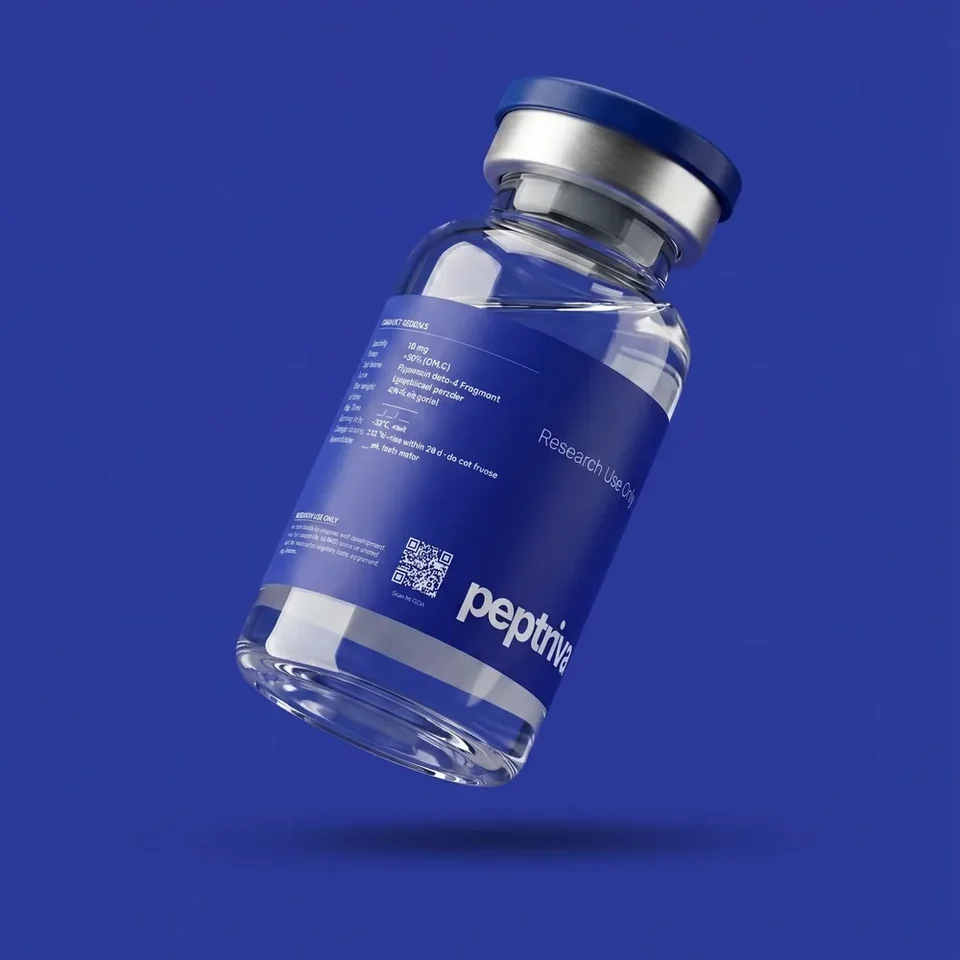
Matrixyl — on the roadmap
Matrixyl is on Peptriva’s catalog roadmap. The dermal peptide available today is GHK-Cu — the copper peptide with the deepest RCT base in this category, including the studies cited across this guide for context. See the dermal peptides overview for the full category map.
Matrixyl vs Matrixyl 3000: which is which?
- Matrixyl (original) is palmitoyl pentapeptide-4 (Pal-KTTKS). One peptide. It stimulates collagen synthesis through the procollagen feedback pathway Katayama discovered in 1993.
- Matrixyl 3000 is palmitoyl tripeptide-1 plus palmitoyl tetrapeptide-7. Two peptides. Mechanism is matrikine signaling, which mimics fragments the skin releases during repair and remodeling.
- The marketing problem: Matrixyl 3000 sometimes gets pitched as a "third generation" upgrade. It isn't. It's a different product on a different pathway. Independent clinical evidence is thinner. Most public data comes from Sederma's own brochures, not peer-reviewed trials.
Matrixyl concentration in finished cosmetic formulations
Matrixyl ships to cosmetic manufacturers as a raw-material solution containing 500 ppm Pal-KTTKS, which is 0.05%. Finished serums typically use that solution at 3–8% of formula weight. So the peptide concentration in the bottle you buy runs roughly 15–40 ppm, or 0.0015–0.004%.
For comparison, GHK-Cu sits at 0.1–0.4% in the most-cited topical trials. That's 100 to 400 times the Matrixyl mass.
Matrixyl is stable at pH 5.5 to 7, is compatible with retinoids in formulation, and has a reported 24-month shelf-life. Liposomal delivery has shown improved dermal permeation in in-vitro studies, though most commercial formulations you'll find don't use it.
How does Matrixyl compare to the alternatives?
1. Matrixyl vs retinoids
Retinoids demonstrate greater efficacy on published effect-size measures. Tretinoin, retinol, retinaldehyde, and adapalene have 40+ RCTs in photoaging. Prescription tretinoin carries FDA approval. The reported trade-off is tolerability: retinoids are associated with peeling, irritation, photosensitivity, and restrictions during pregnancy.
Matrixyl has been reported to produce smaller effects with a milder tolerability profile. Research contexts where retinoid tolerability is a limiting variable have explored Matrixyl as an adjunct ingredient.
2. Matrixyl vs GHK-Cu
Among dermal peptides, GHK-Cu has a deeper RCT base. It's been studied for collagen synthesis, hair follicle activity, wound healing, and a documented ~4,000-gene transcriptomic signature in fibroblasts. Pickart first characterized it in 1973, which gives it a mechanistic anchor most dermal peptides lack. In our reading Matrixyl's pathway is cleaner, GHK-Cu's range is wider, and both effects are modest.
3. Matrixyl vs Argireline
Argireline, or acetyl hexapeptide-8, targets dynamic expression lines through a weak topical mechanism that mimics how botulinum toxin works. Matrixyl targets lines from collagen loss. They go after different wrinkles. Argireline's clinical data is sparse and mostly manufacturer-sponsored. Matrixyl has the cleaner story and better-documented effects.
Is Matrixyl safe?
Two decades of commercial use are associated with a low documented adverse-event profile. The peptide is not considered to be absorbed systemically in meaningful amounts. Palmitic acid is a normal skin lipid. KTTKS is a fragment of a human structural protein. Both the Cosmetic Ingredient Review and EU SCCS reviewed the ingredient without flagging safety concerns at typical concentrations.
- Commonly reported: no adverse events specific to the peptide itself. Mild irritation reported in commercial use is generally attributed to other formulation components.
- Allergic contact dermatitis: rare in the published literature.
- Pregnancy and breastfeeding: no specific contraindication identified; dedicated exposure data are limited.
- Photosensitivity: none documented. Unlike retinoids, Matrixyl has not been associated with increased UV sensitivity.
What's the regulatory status?
Matrixyl is regulated as a cosmetic ingredient, not a drug. In the U.S. it sits under FDA's cosmetic framework. No premarket approval is required, but manufacturers can't make disease-treatment claims. The EU regulates it under Cosmetics Regulation EC 1223/2009.
Sederma owns the trade name. The underlying molecule, palmitoyl pentapeptide-4, is generic. Other formulators list it under its INCI name when they're not buying from Sederma. One important caveat: Matrixyl isn't an injectable. If a vendor offers you injectable Matrixyl, they're working outside the molecule's documented use envelope.
Our stocked dermal peptide: GHK-Cu
Matrixyl is on the catalog roadmap. The dermal peptide available today is GHK-Cu — the most extensively researched topical dermal peptide in the catalog, with documented effects on collagen synthesis, hair-follicle stimulation, and wound healing. COA available with every lot. See the dermal peptides overview for the full picture.
Frequently asked questions
What is Matrixyl?
Matrixyl is the trade name for palmitoyl pentapeptide-4, also written Pal-KTTKS, developed by Sederma. The KTTKS procollagen fragment is conjugated to palmitic acid to facilitate transdermal penetration. It is marketed as a topical collagen-stimulating cosmetic ingredient.
Matrixyl vs Matrixyl 3000?
Original Matrixyl is one peptide, palmitoyl pentapeptide-4. Matrixyl 3000 is a different Sederma combination, palmitoyl tripeptide-1 plus palmitoyl tetrapeptide-7, working on a different pathway. The independent clinical evidence is deeper for the original.
Matrixyl vs Argireline?
Both are dermal peptides on different mechanisms. Matrixyl works on collagen-loss wrinkles. Argireline, or acetyl hexapeptide-8, is sold for dynamic expression lines through a weak topical mechanism. Different wrinkles. They're sometimes combined.
Does Matrixyl actually build collagen?
In fibroblast cell culture, the parent KTTKS pentapeptide stimulates collagen and glycosaminoglycan synthesis, per Katayama and colleagues in 1993. Whether topical application produces clinically meaningful collagen-density changes in vivo is much less established. The Robinson 2005 trial reported modest improvements in wrinkle depth, with smaller effect sizes than retinoid comparators in the literature.
How long do clinical studies show Matrixyl takes to produce measurable effects?
The pivotal Robinson et al. 2005 trial measured outcomes at 4, 8, and 12 weeks of twice-daily topical application. Statistically significant improvements in wrinkle depth and density were observed at 8 weeks and maintained at 12. The trial data indicate 8–12 weeks of consistent application before measurable changes appeared in study participants. Effects required continued application to be maintained.
Matrixyl vs retinoid — what does the evidence show?
Retinoids have larger published evidence bases and larger reported effect sizes in photoaging studies. That's tretinoin, retinol and retinaldehyde. Tretinoin carries FDA approval and decades of Phase III data.
Studies report that Matrixyl produces real but modest effects with a milder tolerability profile: lower rates of peeling, less photosensitivity, and no documented pregnancy contraindication. The literature positions it as an adjunct, not a retinoid equivalent.
Is Matrixyl safe?
Two decades of commercial topical use carry a low adverse-event profile. Systemic absorption isn't considered clinically meaningful at typical formulation concentrations.
The Cosmetic Ingredient Review and the EU SCCS both reviewed the ingredient and identified no safety concerns at standard use levels. Matrixyl is a topical cosmetic ingredient. Injectable use falls outside the documented envelope.
What to know now
- Matrixyl = palmitoyl pentapeptide-4 (Pal-KTTKS) — a procollagen-fragment signal peptide with a palmitoyl anchor for skin penetration.
- Matrixyl 3000 is a different molecule (palmitoyl tripeptide-1 + palmitoyl tetrapeptide-7), not a stronger version. Independent evidence is thinner.
- Robinson 2005 is the pivotal trial: 12 weeks twice-daily, 15–20% reduction in wrinkle depth measures versus vehicle. Real but modest.
- Smaller effect sizes than retinoids, gentler tolerability — a reasonable adjunct, not a replacement.
- Less RCT depth than GHK-Cu across the cosmetic-peptide category.
- Topical use only. Not a research-injection peptide.
What we're watching
Three threads. First: whether an independent head-to-head trial comparing Matrixyl to retinol or tretinoin is ever published. Twenty years in, that gap in the literature is conspicuous.
Second: whether liposomal or nanoparticle delivery translates the 2024 in-vitro permeation gains into measurable clinical outcomes. Third: whether the FDA or the EU sharpens the cosmetic-versus-drug line for peptide actives as category marketing keeps escalating.
What people actually report
These are self-reports, not evidence. No control group, no blinding, and no independent check that the vial held what the label claimed. They are collected here because people asking about Matrixyl deserve an answer rather than a refusal, and because what the community believes is itself worth knowing. Quotes are excerpts; each links to the original post.
Uncontrolled, unverified self-report. The dominant pattern in these posts is not a result but a confound: most posters cannot separate Matrixyl from the rest of their routine, and say so themselves. One reports forehead lines starting to go away, then lists tretinoin, an Epidermal Growth Factor serum and a red light mask in the same thread. Another, five weeks in, cannot tell a smoother forehead from better hydration. A third started Botox while using it. The one poster who finished whole bottles reported brighter, more even tone but no change in their lines. Users also question the evidence base, one stating their understanding that each Matrixyl has a single manufacturer-run study behind it. A skincare creator's own 90-day update tells viewers not to expect quick wrinkle reduction.
Where the community and the published record disagree. The one well-known human trial worked by isolating the peptide. Robinson and colleagues, in the International Journal of Cosmetic Science in 2005, put 3 ppm pal-KTTKS in a plain moisturizer and tested it against the same moisturizer on the other half of the same face, 93 women aged 35 to 55, 12 weeks, double-blind and randomized left-right. The community does the exact opposite. Reddit's flagship Matrixyl before-and-after comes from a poster who, in that same thread, lists tretinoin, an Epidermal Growth Factor serum and a daily red light mask alongside the two peptides, and who answers a skeptic with "It could be just tret."
“It was only when I added Argireline and Matrixyl from the Ordinary into my routine that I noticed they started to go away!”
[B&A] Using Argireline and Matrixyl to get rid of fine lines on my forehead
“I did and after using up the entire bottles I see no change”
Reply on the [B&A] Argireline and Matrixyl forehead thread, six months on
“I’m not sure if that’s from the Matrixyl or just better hydration in general”
Has anyone actually seen long-term results with Matrixyl serums?
“each of the matrixyls only has one study to support its efficacy, performed by the manufacturer”
“Since starting it I have also gotten Botox for migraines so it is difficult to tell if it's actually doing anything.”
Has anyone seen any actual results using Matrixyl+ Argireline?
“if you’re expecting quick wrinkle reduction, you might be disappointed”
Maximum Anti-Aging - How to use Matrixyl in Skincare? (3-month update)
Posts are quoted under fair use and linked to their authors. Nothing on this page is hosted here, and no claim above has been verified beyond confirming that the person wrote it.
References
- Katayama, K., Armendariz-Borunda, J., Raghow, R., Kang, A. H., & Seyer, J. M. (1993). A pentapeptide from type I procollagen promotes extracellular matrix production. Journal of Biological Chemistry, 268(14), 9941–9944. https://doi.org/10.1016/s0021-9258(18)82153-6
- Robinson, L. R., Fitzgerald, N. C., Doughty, D. G., Dawes, N. C., Berge, C. A., & Bissett, D. L. (2005). Topical palmitoyl pentapeptide provides improvement in photoaged human facial skin. International Journal of Cosmetic Science, 27(3), 155–160. https://doi.org/10.1111/j.1467-2494.2005.00261.x
- Lupo, M. P., & Cole, A. L. (2005). Use of a facial moisturizer containing palmitoyl pentapeptide improves the appearance of aging skin. Journal of the American Academy of Dermatology, 52(3), Supplement 1, P34. https://doi.org/10.1016/j.jaad.2004.10.390
- Choi, Y. L., Park, E. J., Kim, E., Na, D. H., & Shin, Y.-H. (2014). Dermal stability and in vitro skin permeation of collagen pentapeptides (KTTKS and palmitoyl-KTTKS). Biomolecules & Therapeutics, 22(4), 321–327. https://doi.org/10.4062/biomolther.2014.053
- Khalil, M., Hamadou, A. H., Yassin, A. E. B., et al. (2024). Liposome encapsulation of the palmitoyl–KTTKS peptide: Structural and functional characterization. Pharmaceutics, 16(2), 219. https://doi.org/10.3390/pharmaceutics16020219
- U.S. Food and Drug Administration. (2024). Is It a Cosmetic, a Drug, or Both? (Or Is It Soap?). https://www.fda.gov/cosmetics/cosmetics-laws-regulations/it-cosmetic-drug-or-both-or-it-soap
- European Commission. (2009). Regulation (EC) No 1223/2009 of the European Parliament and of the Council on cosmetic products. https://eur-lex.europa.eu/legal-content/EN/TXT/?uri=CELEX%3A32009R1223