
The short answer. Most of the world's peptide raw material is made in China, including much of what Western brands sell.
- Western sellers frequently relabel that material, so a domestic address does not mean domestic synthesis.
- Country of synthesis tells you very little about what is actually inside a given vial.
- Buying direct changes customs risk, your recourse when a lot is wrong, and who ran the independent testing.
You can buy from Chinese peptide suppliers directly or through a domestic reseller. In many cases the powder came out of the same reactor either way. Origin isn't a quality grade. What changes is customs risk, your recourse, and who paid for the independent test.
Most of the world’s peptide raw material is made in China. That includes much of what Western brands sell after relabeling. So the country of synthesis tells you very little about a vial. What separates buying direct from buying domestic is not chemistry. It is customs risk. It is your recourse when a lot is wrong. And it is who ran the independent testing.
“Chinese peptides” gets used as shorthand for low quality, and we think that's lazy. Chinese contract manufacturers supply the global pharmaceutical industry, and solid-phase peptide synthesis is the same chemistry wherever the reactor sits.
The real differences are downstream of synthesis, and that's where we'd have you look.
Where research peptides are actually made
The supply chain is shorter than most buyers assume. A large share of research peptides sold under Western brand names is synthesized by a comparatively small number of contract manufacturers, then imported, sometimes retested, relabeled and resold.
A domestic seller is frequently a testing-and-distribution operation rather than a manufacturer. That isn't a criticism. The testing and distribution is precisely the value being added.
That reframes the question. It isn't “Chinese or domestic.” It's how many verification steps sit between the reactor and your vial, and who performed them.
What buying direct actually changes
The price gap is the whole reason anyone asks. It is also smaller than it looks once a domestic vendor’s testing and shipping are in the comparison. Ten domestic vendors priced side by side is the figure to hold the direct quote against.
| Factor | Buying direct | Buying domestic |
|---|---|---|
| Synthesis quality | Often the same facility | Often the same facility |
| Independent testing | Usually the manufacturer's own COA | A second, independent test — if the seller pays for one |
| Customs | Real seizure risk, rarely refunded | Already cleared |
| Recourse | Effectively none across borders | Whatever the seller offers |
| Lead time | Weeks, variable | Days |
| Price | Lower — partly efficiency, partly removed checks | Higher, with the checks priced in |
An in-house COA is the supplier vouching for itself. This is the substantive issue, and it has nothing to do with geography. A certificate produced by the same organization that made the material is a self-assessment.
Prefer a seller who commissions independent testing, because an outside lab has no stake in the result. That's exactly as true of a domestic seller skipping the step as it is of a manufacturer in Hangzhou.
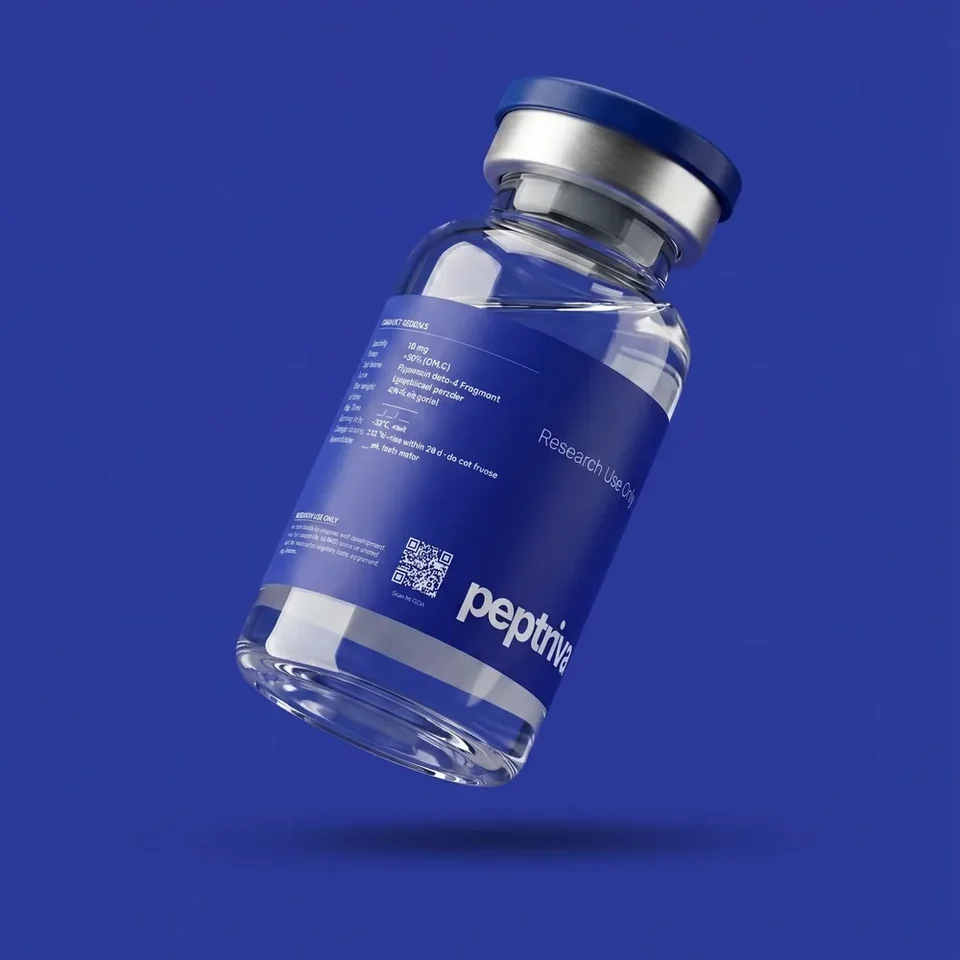
Research compounds
Independently tested per lot, with the certificate matched to the vial you receive — the verification step this page argues is the one that actually distinguishes sources.
Verifying any source, wherever it is
The checks don't change with the country. We'd run the same four on any supplier, in any jurisdiction. The longer version is seven checks, scored vendor by vendor.
- A named external lab. One whose accreditation you can look up yourself, not a logo on a PDF.
- A matching lot number. The number on the certificate has to be the number on your vial.
- Mass spectrometry, not just purity. Molecular weight confirms identity; an HPLC trace alone confirms only that one peak is clean.
- Residual solvent and counter-ion figures where the compound warrants them.
Our how to read a COA page walks through what each of those means. Our lab accreditation guide covers why a named lab matters more than a logo.
What we’re watching
Two things move this page. The first is customs enforcement, which is the one real difference between the two routes and the one most likely to change without notice.
The second is whether per-lot independent testing becomes standard rather than a selling point. If it does, the origin argument disappears entirely and the only question left is who paid for the test.
Frequently asked questions
Are most research peptides made in China?
A large share of the world's peptide raw material is synthesized in China, including material that is later relabeled and sold by Western brands. Country of synthesis is one of the least informative things you can know about a vial.
Is it safe to buy peptides directly from China?
The synthesis is not the risk — Chinese contract manufacturers supply the global pharmaceutical industry. The risks specific to buying direct are customs seizure, no practical recourse if a lot is wrong, and no independent verification of whatever COA arrives with it.
Why are Chinese peptides cheaper?
You are buying closer to the manufacturer, without the domestic importer's margin, testing costs, warehousing or support. Some of that saving is real efficiency; some of it is the removal of the checks a domestic seller was performing.
Will customs seize peptides from China?
It happens, and unpredictably. Unapproved drug material is exactly what customs screening is designed to catch, and a seized shipment is generally not refunded by the seller.
How do you verify a Chinese supplier's COA?
The same way you verify anyone's. Check the testing lab is named and independently checkable. Check the lot number matches your vial. Check the report shows mass-spec identity alongside HPLC purity. A COA produced in-house by the manufacturer is the supplier vouching for itself, wherever it's located.
Research compounds
Third-party tested research compounds, each shipped with a batch-matched certificate of analysis showing HPLC purity and mass-spec identity — the documentation this site argues you should hold any supplier to.
What to know now
- Most of the world's peptide raw material is made in China, including much of what Western brands sell.
- Western sellers frequently relabel that material, so a domestic address does not mean domestic synthesis.
- Country of synthesis tells you very little about what is actually inside a given vial.
- Buying direct changes customs risk, your recourse when a lot is wrong, and who ran the independent testing.
- No origin removes the need to verify the specific lot yourself, wherever the supplier happens to be based.
References
- Verlander, M. (2007). Industrial applications of solid-phase peptide synthesis — a status report. International Journal of Peptide Research and Therapeutics, 13(1–2), 75–82. https://doi.org/10.1007/s10989-006-9075-7
- International Council for Harmonisation. (2022). ICH guideline Q3A(R2): Impurities in new drug substances. https://www.ich.org/page/quality-guidelines
- International Organization for Standardization. (2017). ISO/IEC 17025:2017 — General requirements for the competence of testing and calibration laboratories. https://www.iso.org/standard/66912.html
- American Association for Laboratory Accreditation (A2LA). Accredited laboratory directory. https://a2la.org/directory-search/
- Mant, C. T., & Hodges, R. S. (Eds.). (1991). High-Performance Liquid Chromatography of Peptides and Proteins: Separation, Analysis, and Conformation. Boca Raton, FL: CRC Press. https://doi.org/10.1201/9780203751947
- Thomas, A., Walpurgis, K., & Thevis, M. (2024). Chromatographic-mass spectrometric analysis of peptidic analytes in doping control urine samples. Journal of Mass Spectrometry, 59(1), e4996. https://doi.org/10.1002/jms.4996