
Most vendors will send you a certificate. Far fewer will send you the certificate for the batch in the box. That single distinction separates a document from evidence, and it is checkable in under a minute without trusting anybody.
The short answer. Match the lot code before reading any result. A certificate is only evidence about the vial whose code it carries.
- Identity and purity are different tests. Purity alone does not establish what the compound is.
- A named laboratory is the check that costs a legitimate vendor nothing, and an illegitimate one everything.
- Manufacturer and independent certificates answer different questions. Ask which one you have been sent.
Work lot-first. Find the lot code on the vial, open the certificate for that lot, and confirm the codes match before reading a single result. A certificate with no lot code, or a different one, describes a different batch however good its numbers look.
The nine checks
Run these in order. The first three decide whether the rest are worth reading.
- A lot or batch code appears on the certificate, and it is the same code printed on the vial. Character for character.
- The certificate is dated, and the date is after the lot was made rather than before.
- A laboratory is named. Not "third-party tested", not a logo. A name you can look up.
- Identity is reported separately from purity. Purity alone does not establish what the compound is.
- Identity was established by mass spectrometry, reported as a confirmed mass rather than an assertion.
- Purity is a chromatographic result with a method attached, normally reversed-phase HPLC with a detection wavelength.
- Net content or fill mass is reported, measured rather than restated from the label.
- The document is readable. A cropped photograph of part of a certificate is not a certificate.
- The compound named on the certificate is the one you ordered, including salt form and any blend components.
Checks one to three fail more often than the rest combined, and they are the cheapest to run.
Matching the certificate to the vial
The order matters. Every result on a certificate is a statement about one batch, so the matching step comes before the reading step.
Find the lot code on the vial label. Find the same code on the certificate. If the vendor publishes certificates by lot, the code is how you retrieve the right one; if the vendor sends a certificate on request, the code is what you quote when asking. Where a vial carries a QR code, check where it resolves to before trusting it, because a QR that lands on a general quality page rather than a lot record is decoration.
Three outcomes end the exercise. A certificate with no lot code is not evidence about your vial. A certificate whose lot code differs from the vial is the wrong document rather than a close-enough one. An illegible code on the vial leaves nothing to match against, and the vendor should replace the vial or produce the shipping record.
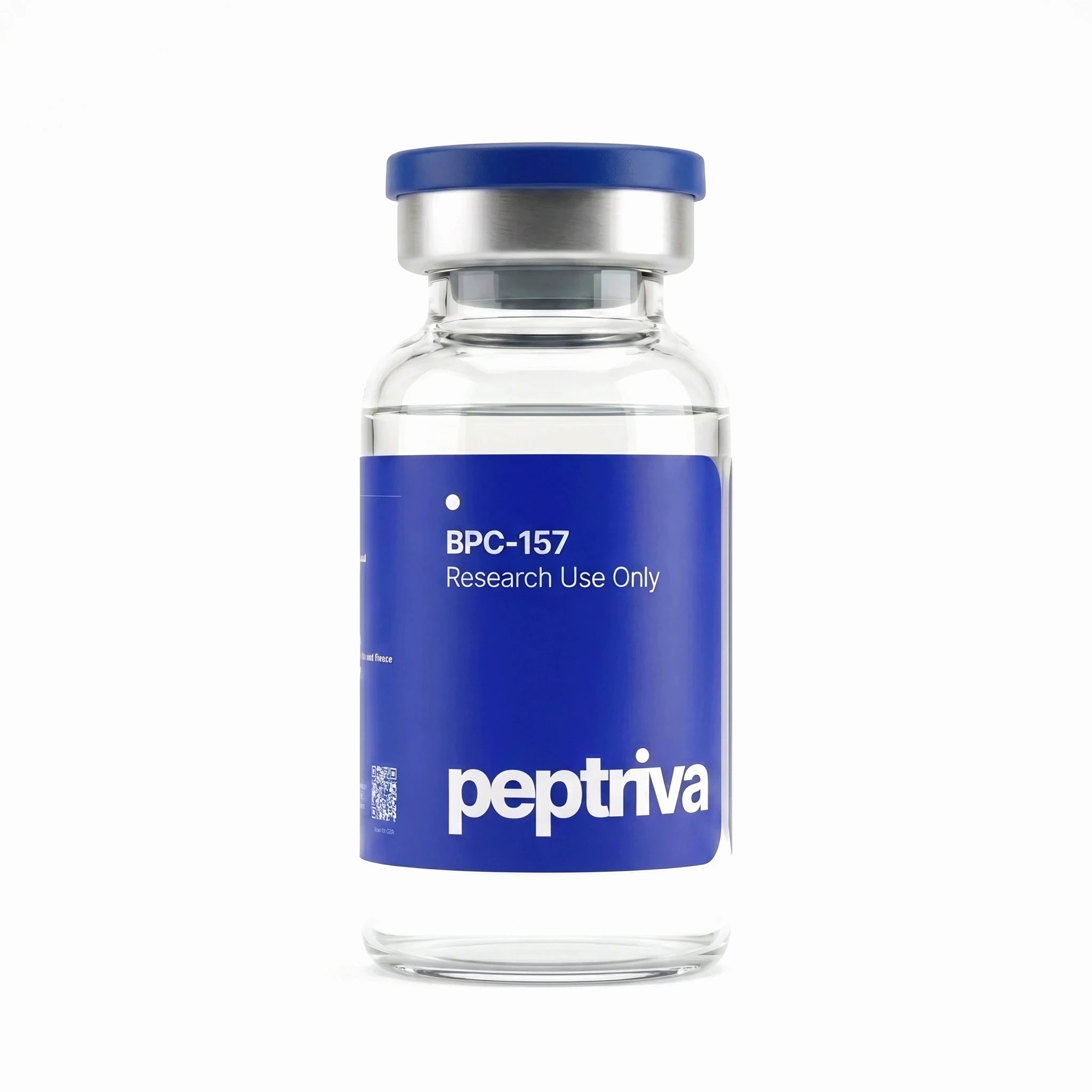
BPC-157
Research-use-only material, sold by the vial with batch documentation. Check the certificate of analysis against the batch you receive.
What to send a vendor who has not published one
Vendors that hold certificates but do not publish them will usually send one. The request is more likely to work when it names the lot and the tests, because a vague ask gets a vague answer.
Hi — I received order [number], which shipped lot [code] of [compound]. Could you send the certificate of analysis for that specific lot? I am looking for the identity result, the purity result with the method used, and the name of the laboratory that ran them. If the certificate you hold is from the manufacturer rather than an independent lab, please say so.
The last sentence is the useful one. Manufacturer certificates and independent certificates are both legitimate documents and they answer different questions, and a vendor that distinguishes them without being pushed is telling you something about how it handles the rest.
Red flags, and what each one means
None of these prove a product is wrong. Each one means a specific thing is unverified.
- "Third-party tested" with no laboratory named. Unverifiable by construction. There is nothing to check.
- One certificate covering several products. A certificate describes a batch, so a document spanning a catalog is a marketing asset.
- Purity with no identity result. Tells you the sample is homogeneous, not what it is.
- A certificate reused across lots. The results were true of one batch. They are not evidence about a later one.
- Refusal to name the lab. Accreditation is checkable in public directories, so naming the lab costs a legitimate vendor nothing.
Accreditation itself is worth understanding rather than taking as a badge. ISO/IEC 17025 accredits a laboratory as competent to run specific named methods, and the scope lists them; a laboratory can be accredited for one assay and not another. Accredited laboratories are listed in public directories, so the claim is checkable in a minute.
BPC-157
Research-use-only material, sold by the vial with batch documentation. Check the certificate of analysis against the batch you receive.
What to know now
- Match the lot code before reading any result. A certificate is only evidence about the vial whose code it carries.
- Identity and purity are different tests. Purity alone does not establish what the compound is.
- A named laboratory is the check that costs a legitimate vendor nothing, and an illegitimate one everything.
- Manufacturer and independent certificates answer different questions. Ask which one you have been sent.
What we're watching
Whether vendors move from publishing a representative certificate to publishing one per lot, retrievable by code. That is the change that would make this checklist unnecessary, and a handful of suppliers have started.
Frequently asked questions
What is the single most important thing to check on a peptide COA?
That the lot or batch code on the certificate matches the code printed on the vial. Without that, none of the results describe the material you received.
Is a manufacturer's certificate as good as an independent one?
They answer different questions. A manufacturer's certificate reports what the producer measured; an independent certificate reports what an outside laboratory measured on the same lot. Neither is fake, and a vendor should tell you which one it is sending.
Does high HPLC purity mean the peptide is the right compound?
No. Purity is a chromatographic ratio describing how much of the sample is the main peak. Identity is a separate test, normally mass spectrometry, and a certificate reporting purity without identity has not established what is in the vial.
What if a vendor will not name the testing laboratory?
Treat it as unverified rather than as proof of anything. Accredited laboratories are listed in public directories, so naming one is free for a vendor with nothing to hide.
Can I check a laboratory's accreditation myself?
Yes. Accreditation bodies publish searchable directories of accredited laboratories along with the scope each one is accredited for, which is the part worth reading.
References
- International Organization for Standardization. (2017). ISO/IEC 17025:2017 — General requirements for the competence of testing and calibration laboratories. https://www.iso.org/standard/66912.html
- American Association for Laboratory Accreditation (A2LA). Accredited laboratory directory. https://a2la.org/directory-search/
- Thomas, A., Walpurgis, K., & Thevis, M. (2024). Chromatographic-mass spectrometric analysis of peptidic analytes in doping control urine samples. Journal of Mass Spectrometry, 59(1), e4996. https://doi.org/10.1002/jms.4996
- U.S. Food and Drug Administration. (2013). Distribution of In Vitro Diagnostic Products Labeled for Research Use Only or Investigational Use Only. FDA Guidance Document. https://www.fda.gov/regulatory-information/search-fda-guidance-documents/distribution-vitro-diagnostic-products-labeled-research-use-only-or-investigational-use-only