
Search cartalax benefits and you get joints, telomeres, brain aging and inflammation. Trace each one back and most lands on a different peptide. PubMed holds about 4 papers on AED since 2015, and all of them are preclinical.
The short answer. Cartalax is AED, a three-residue peptide of about 333 Da, not Epitalon.
- Telomerase, longevity and neurogenesis claims were measured on AEDG, a different molecule.
- PubMed holds roughly 4 AED papers since 2015, all preclinical and all from one group.
- Zero Western randomized trials of Cartalax exist, and no human joint endpoint has been reported.
Cartalax is the AED tripeptide, about 333 Da. Sellers list joint, aging and brain benefits. Most of that data belongs to Epitalon, a different peptide. PubMed holds roughly 4 papers on AED since 2015. All are preclinical and all come from one group. Zero Western RCTs have tested it in people.
What are the claimed Cartalax benefits?
The claims are consistent across sellers. Cartilage and joint support, slower aging, telomerase activation, neuroprotection, lower inflammation. The useful question is not whether each one sounds plausible. It is which molecule it was measured on.
Cartalax is AED: alanine, glutamic acid, aspartic acid. Three residues, about 333 Da. Epitalon is AEDG, the same sequence with a glycine on the end. Pinealon is EDR. They are relatives, not the same compound, and the published work does not transfer between them.
| Claimed benefit | Where the data actually sits | Measured on AED itself? |
|---|---|---|
| Cartilage and joint repair | The bioregulator model and the compound’s name | No human study found |
| Telomerase and longevity | Epitalon (AEDG) cell and animal work | No |
| Neuroprotection, neurogenesis | Epitalon and Pinealon preclinical work | No |
| Gene expression changes | Short-peptide cell culture studies | Cell culture only |
| Anti-inflammatory effect | Preclinical reports from one group | No clinical endpoint |
That table is the article. The rest is detail. The Cartalax complete guide covers what the vial is and where the sequence came from.
The cartilage claim comes from the name, not a trial
Cartalax is positioned as the joint peptide. The name points at cartilage. The marketing follows the name.
No controlled human trial of AED in joint disease has been published. We found zero. There is no imaging endpoint, no validated pain score, no cartilage thickness measure, no comparison against a steroid or hyaluronic acid.
The target market is enormous, which is part of why the claim sells.
Osteoarthritis affected 595 million people worldwide in 2020.
GBD 2021 Osteoarthritis Collaborators, The Lancet Rheumatology, 2023595 million people is the size of the problem a three-amino-acid peptide is being offered for, on the strength of four preclinical papers. Those two numbers belong next to each other.
A peptide named after a tissue is not evidence about that tissue. The name was chosen by the people selling the idea.
Longevity and brain claims belong to Epitalon
Most of the impressive material on a Cartalax page was generated with AEDG, not AED. Epitalon is the most studied peptide in this family by a wide margin, and a 2025 review in the International Journal of Molecular Sciences by Araj and colleagues summarizes it as a highly bioactive pineal tetrapeptide with promising properties.
Promising is the operative word there. The Epitalon record is largely in vitro and animal work too.
AEDG peptide (epitalon) stimulates gene expression and protein synthesis during neurogenesis.
Khavinson et al., Molecules, 2020Read the subject of that sentence. It is AEDG. A seller who puts it on a Cartalax listing has swapped the molecule and kept the finding.
- Telomerase claims. Generated with Epitalon in cell systems. Not with AED.
- Neurogenesis claims. Khavinson 2020 is an AEDG study. Not AED.
- Pineal and sleep claims. Epitalon again, which is a pineal peptide. Cartalax is not.
- Lifespan claims. Animal longevity work in this family sits with the tetrapeptide, not the tripeptide.
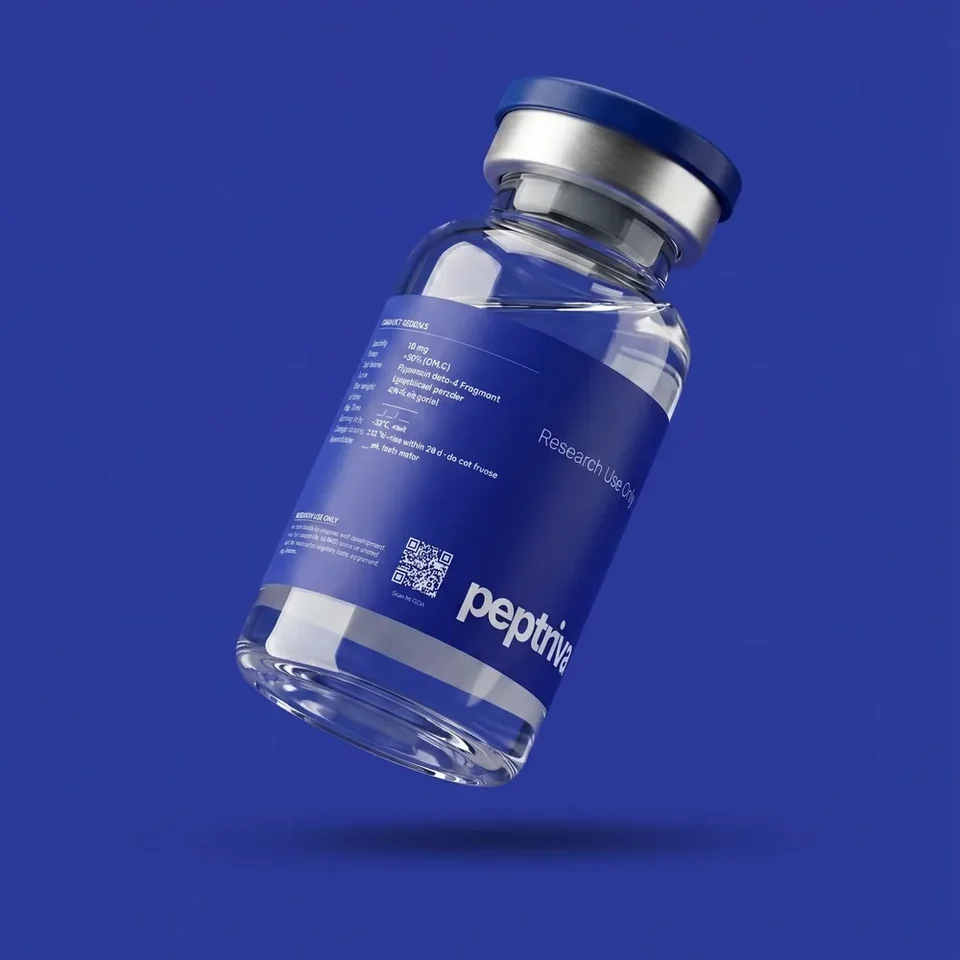
Cartalax
The compound discussed here, supplied as a research compound with a certificate of analysis matched to the lot.
What has actually been measured on AED
There is real work here. It is just small, and it is a long way from a joint.
Ashapkin and colleagues, writing in Molecular Biology Reports in 2020, looked at short peptides in aging cultures of human mesenchymal stem cells. The peptides were applied at nanomolar concentrations and shifted the expression of 5 genes in those cultures.
That is a cell culture result. It says a small peptide can reach a nucleus and change transcription in a dish. It does not say anything about a knee, a lifespan, or a person.
- No pharmacokinetics in humans. No published absorption, distribution or half-life data we could find.
- No dose-finding in humans. Nothing has been titrated in people and reported.
- No safety database. No controlled adverse event record exists for AED.
- No independent replication. The work has not been repeated outside the originating group.
Why four papers from one lab is the whole problem
A PubMed search for AED tripeptide and Cartalax over 2015 to 2026 returns about 4 papers. All preclinical. All from the Khavinson group in Saint Petersburg.
That is not an accusation. Khavinson’s group has published short peptide research for decades and the methods are real. But a literature where one lab produced every result has no replication built into it. The usual correction mechanism, another team failing to repeat the finding, has never had a chance to run.
Zero Western RCTs of Cartalax exist. No regulator anywhere has reviewed it for a joint indication. The research vial is a research vial.
Compare that to how a joint drug normally earns a claim: a randomized trial, a placebo arm, a validated score, and a second trial that agrees with the first. None of those four things has happened for AED.
What you can check instead of the benefit list
If the efficacy question has no answer, the identity question still does. These are the parts of a Cartalax purchase that produce documents.
| Question | Document that answers it |
|---|---|
| Is it the right sequence? | Mass spectrometry on the COA, near 333 Da for AED |
| How pure is it? | HPLC trace with a percentage and a date |
| Was it stored correctly? | Shipping and storage conditions on arrival |
| Does the lot match? | Lot number on the vial matching the certificate |
Our pages on reading a certificate of analysis, storage temperature and reconstitution cover the mechanics. The legal status page covers what research-use labeling means and does not mean.
Cartalax
Research-use-only material, sold by the vial with batch documentation. Check the certificate of analysis against the batch you receive.
What to know now
- Cartalax is AED, a three-residue peptide of about 333 Da, not Epitalon.
- Telomerase, longevity and neurogenesis claims were measured on AEDG, a different molecule.
- PubMed holds roughly 4 AED papers since 2015, all preclinical and all from one group.
- Zero Western randomized trials of Cartalax exist, and no human joint endpoint has been reported.
- The nearest AED-relevant data is gene expression in aging stem cell cultures at nanomolar concentrations.
- Osteoarthritis affected 595 million people in 2020, which explains the marketing, not the evidence.
What we're watching
Watch for a Cartalax listing that cites telomerase or neurogenesis studies. Open the paper and read the sequence. If it says AEDG, the finding belongs to Epitalon, and the vendor swapped the molecule while keeping the headline.
Frequently asked questions
Does Cartalax help joint pain?
No published human trial has tested it. The joint claim rests on the compound's name and on preclinical work from one group. There is no pain score, no imaging endpoint and no control arm anywhere in the AED literature.
Is Cartalax the same thing as Epitalon?
No. Cartalax is AED, three amino acids. Epitalon is AEDG, the same sequence plus a glycine. They are relatives. Findings from Epitalon studies, including the 2020 Khavinson neurogenesis work, are not findings about Cartalax.
Does Cartalax activate telomerase?
That claim comes from Epitalon cell studies, not from AED. We found no published telomerase measurement for the AED tripeptide in any species.
Are there human studies of Cartalax?
Zero Western randomized controlled trials. The published record is about 4 preclinical papers since 2015, all from the Khavinson group in Saint Petersburg.
What is the strongest evidence that exists for Cartalax?
Short peptide work in aging human mesenchymal stem cell cultures, reported by Ashapkin and colleagues in 2020, where nanomolar concentrations shifted expression of 5 genes. That is a dish, not a patient.
References
- PubMed search: “AED tripeptide” OR “Cartalax” OR “Ala-Glu-Asp peptide”, 2015–2026. pubmed.ncbi.nlm.nih.gov PMID ?term=AED+tripeptide+Khavinson
- Ashapkin, V., Khavinson, V., Shilovsky, G., Linkova, N., & Vanyushin, B. (2020). Gene expression in human mesenchymal stem cell aging cultures: Modulation by short peptides. Molecular Biology Reports, 47(6), 4323–4329. https://doi.org/10.1007/s11033-020-05506-3
- Khavinson, V., Diomede, F., Mironova, E., et al. (2020). AEDG peptide (epitalon) stimulates gene expression and protein synthesis during neurogenesis: Possible epigenetic mechanism. Molecules, 25(3), 609. https://doi.org/10.3390/molecules25030609
- Araj, S. K., Brzezik, J., Mądra-Gackowska, K., & Szeleszczuk, Ł. (2025). Overview of Epitalon — Highly Bioactive Pineal Tetrapeptide with Promising Properties. International Journal of Molecular Sciences, 26(6), 2691. https://doi.org/10.3390/ijms26062691
- GBD 2021 Osteoarthritis Collaborators. (2023). Global, regional, and national burden of osteoarthritis, 1990–2020 and projections to 2050: A systematic analysis for the Global Burden of Disease Study 2021. The Lancet Rheumatology, 5(9), e508–e522. https://doi.org/10.1016/S2665-9913(23)00163-7