
You can buy cagrilintide from research-chemical suppliers online, or you can receive it inside a clinical trial. Those are the two routes, only the first is something you can choose, and that is the short answer to where to buy cagrilintide.
Cagrilintide is a long-acting analog of amylin, the fullness hormone released alongside insulin. No regulator has approved it, so there’s no pharmacy route and no prescription to write. On its own it cut body weight about 9.7% in Phase 2, and paired with semaglutide as CagriSema, REDEFINE-1 reported about 20.4%. Almost nobody who searches for it wants it alone.
Where can you buy cagrilintide?
Cagrilintide comes from research-chemical suppliers online, or from inside a clinical trial. Cagrilintide is investigational everywhere, and that single fact closes the pharmacy channels that people normally consider first.
- Research-chemical suppliers, online. The route almost everyone uses. Freeze-dried powder, research-use-only labeling, no prescription. It's also the route with no regulator standing behind the vial.
- A clinical trial. The only way to receive manufacturer-made cagrilintide. The REDEFINE program is where the 20.4% figure came from. You don't get to pick this route; a study has to be recruiting and you have to fit it.
- Pharmacy, retail or compounding. Closed. There's no approval in any country, so no product exists to dispense, and a compounder has no approved drug or cleared bulk substance to work from.
So in practice you have one channel you control and one you can only apply to. We'd rather say that plainly than pretend there's a menu here.
What the research-supply route doesn't give you. No prescriber. No dose anyone has signed off. No regulated batch release. And for this compound specifically, no guarantee that what you bought is cagrilintide rather than a mixture sold under its name.
Which vendors should be on your cagrilintide shortlist?
Naming the channel doesn't tell you who to buy from, so here is the shortlist. Of the 16 storefronts we checked on 13 August 2026, these six published the most: a third-party certificate you can open, and a testing lab you can name. The table scores the vendor rather than the catalog — cagrilintide is a narrower listing than most, so confirm it is stocked as a single rather than only inside a blend. Pricing across this set is benchmarked on BPC-157, the one compound all six carry; no cagrilintide price was verified across these vendors, so there is no price column rather than an estimated one.
| Vendor | COA | Lab named | Ships free at |
|---|---|---|---|
| Peptriva Premium brand | Third-party, published | Freedom Diagnostics — on the product page | $200 |
| Sports Technology Labs | Third-party, published | MZ Biolabs and Colmaric — on the site and the document | $149 |
| Swiss Chems | Third-party, published | Janoshik — on the site | $100 |
| Core Peptides | Third-party, published (A2LA #6377.01.01) | Vanguard Laboratory — document only | $200 |
| PS Peptides | Third-party, published | North American Diagnostics — document only | $200 |
| BioTech Peptides | Third-party, published | MZ Biolabs — document only | $200 |
Three vendors from the same survey are absent on purpose. Red Rock Peptides advertises “Verified With COAs” and publishes no certificate at all. Limitless Biotech gates every price behind an account, so nothing it offers can be compared against anything. Behemoth Labz does publish, but its newest genuine certificate is dated August 2024. The full ranking, with the price column, is in our comparison of peptide companies. Disclosure: this site earns a commission on purchases made through its links, Peptriva included — which is why every column above is a document you can open or a figure you can load for yourself.
No verified CAS number or reference mass for cagrilintide sits in the dataset behind this table, so require them on the certificate instead: a mass-spec identity line that confirms the acylated 32-residue analog, a lot number matching your vial, and — if the vial is a blend with semaglutide — a separate identity line for each compound.
Why is cagrilintide usually bought as half of a blend?
Cagrilintide is usually bought paired with semaglutide because the combination is what the headline numbers come from. Amylin works through a different pathway from GLP-1, the gut hormone semaglutide targets. That independence is the whole argument for combining them: two appetite signals rather than a bigger dose of one.
The monotherapy figure is what you'd expect from a supporting mechanism. The combination figure is what put cagrilintide on the map.
The sourcing consequence is direct. Cagrilintide is frequently sold alongside semaglutide in a single vial, and those are two separate molecules that need two separate verifications.
“
Coadministered cagrilintide and semaglutide in adults with overweight or obesity.
Garvey et al., New England Journal of Medicine, 2025
“
Once-weekly cagrilintide for weight management in people with overweight and obesity.
Lau et al., The Lancet, 2021, the dose-finding phase 2 trial
What should you check before buying cagrilintide?
Check cagrilintide for mass-spec identity confirming the fatty-acid tail. Ask for a separate certificate per compound if the vial is a blend. Then check HPLC purity and normalize the price per mg. The table says why each one bites harder here.
| Check | Why it matters here |
|---|---|
| Mass spec identity | A 32-residue analog with a fatty-acid tail — the acylation is what makes it long-acting, and it is the thing worth confirming |
| Separate COAs for combination products | If it is sold with semaglutide, one certificate covering "the blend" verifies neither component |
| HPLC purity | Standard; acylated peptides purify less cleanly than plain ones |
| Investigational status | No approval anywhere. A supplier implying otherwize is a signal in itself |
| Cost per mg | Normalize before comparing, especially across blend and single-compound presentations |
A blend COA is not two COAs. Combination vials are common in this class now. A single certificate reporting one purity figure for a mixture tells you very little about either component. Two compounds need two identity confirmations.
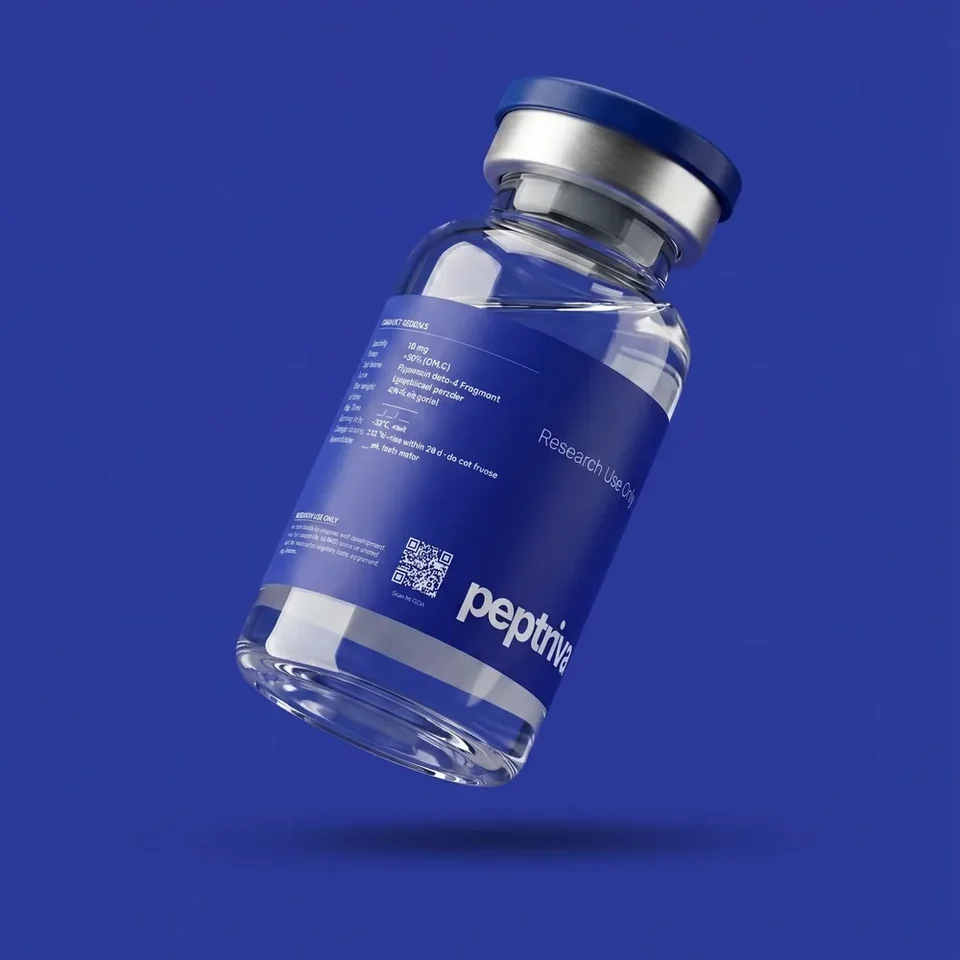
Metabolic research compounds
Third-party tested metabolic research compounds, each with a batch-matched certificate of analysis showing HPLC purity and mass-spec identity.
What are the red flags when buying cagrilintide?
The commonest cagrilintide red flag is one certificate covering a two-compound vial. Three more we treat as disqualifying:
- One certificate for a two-compound vial. The single most common problem with this molecule. It verifies neither half.
- Any suggestion of approval. Cagrilintide is investigational in every market. A seller who blurs that has told you something about the rest of their claims.
- Purity quoted without identity. A clean chromatogram of the wrong acylated peptide is still a clean chromatogram.
- Weight-loss claims on the listing. That's an unapproved drug claim, and the numbers being borrowed come from trials that used a different, manufacturer-made product.
The complete guide covers the amylin pathway, and the REDEFINE-1 readout covers the combination data.
Frequently asked questions
Can you get cagrilintide from a pharmacy?
No. It isn't approved anywhere, so no pharmacy has a product to dispense and no prescriber has one to name. Compounding is closed for the same reason: there's no approved drug and no cleared bulk substance to build from.
Is cagrilintide approved?
Not anywhere. It's investigational, developed both on its own and as half of the CagriSema combination with semaglutide.
How much weight does cagrilintide produce alone?
Roughly 9.7% body-weight reduction in Phase 2 monotherapy. The combination with semaglutide reported about 20.4% in REDEFINE-1, which is why it's rarely discussed on its own.
What is the difference between cagrilintide and semaglutide?
Different pathways entirely. Cagrilintide is an amylin analog; semaglutide is a GLP-1 receptor agonist. That independence is the argument for combining them rather than raising the dose of either.
Is a combination vial a problem?
For verification, yes. A single certificate reporting a purity figure for a mixture doesn't confirm the identity of either component. Two compounds need two identity confirmations.
Metabolic research compounds
Third-party tested research compounds, each shipped with a batch-matched certificate of analysis showing HPLC purity and mass-spec identity — the documentation this site argues you should hold any supplier to.
What to know now
- Two routes, one of them yours. Research-supply vendors online, or a clinical trial you have to qualify for. No pharmacy sells it.
- Alone the effect is modest. Used on its own in Phase 2, cagrilintide cut body weight about 9.7%.
- As CagriSema it is a different proposition. Paired with semaglutide, REDEFINE-1 reported about 20.4%.
- It is investigational everywhere. No regulator has approved cagrilintide, on its own or as half of CagriSema.
- Amylin is a separate pathway. That is why cagrilintide is paired with a GLP-1 rather than measured against one.
- A blend COA verifies neither component. One certificate covering a mixed vial establishes the identity and content of neither peptide in it.
What we're watching
The obvious thing to track is regulatory filing on CagriSema. If the combination is approved, cagrilintide stops being a research-supply-only compound overnight, and the pharmacy route opens for the branded pair rather than the loose peptide. We'd also watch whether single-compound cagrilintide keeps being sold at all, or whether the market collapses into blend vials sold on the combination's numbers.
References
- Lau, D. C. W., Erichsen, L., Francisco, A. M., Satylganova, A., le Roux, C. W., McGowan, B., Pedersen, S. D., Pietiläinen, K. H., Rubino, D., & Batterham, R. L. (2021). Once-weekly cagrilintide for weight management in people with overweight and obesity: a multicentre, randomised, double-blind, placebo-controlled and active-controlled, dose-finding phase 2 trial. The Lancet, 398(10317), 2160–2172. https://doi.org/10.1016/S0140-6736(21)01751-7
- Garvey, W. T., Blüher, M., Osorto Contreras, C. K., et al. (2025). Coadministered cagrilintide and semaglutide in adults with overweight or obesity. New England Journal of Medicine, 393(7), 635–647. https://doi.org/10.1056/NEJMoa2502081
- Wilding, J. P. H., Batterham, R. L., Calanna, S., et al. (2021). Once-weekly semaglutide in adults with overweight or obesity (STEP-1). New England Journal of Medicine, 384(11), 989–1002. https://doi.org/10.1056/NEJMoa2032183
- Thomas, A., Walpurgis, K., & Thevis, M. (2024). Chromatographic-mass spectrometric analysis of peptidic analytes in doping control urine samples. Journal of Mass Spectrometry, 59(1), e4996. https://doi.org/10.1002/jms.4996
- International Organization for Standardization. (2017). ISO/IEC 17025:2017 — General requirements for the competence of testing and calibration laboratories. https://www.iso.org/standard/66912.html