
PT-141 side effects are unusually well documented for a research peptide. Clayton and colleagues pooled 43 studies and about 3,500 subjects in 2022. The catch is who was in them, and what dose they got.
The short answer. PT-141: Nausea was reported by 40% of women on bremelanotide in Phase III.
- About 18% stopped the drug because of adverse events.
- Skin darkening was 1% over 24 weeks, but over one-third after 16 consecutive daily doses.
- Blood pressure rose about 6 mmHg systolic and fell back within hours.
Nausea is the main one. It hit 40% of women on the drug. About 18% stopped over side effects. Skin darkening showed up in 1% over 24 weeks. With 16 consecutive daily doses, over one-third darkened. Blood pressure rose, then came back down.
What the trials actually measured
PT-141 is bremelanotide. It is approved as Vyleesi for hypoactive sexual desire disorder in premenopausal women. That approval came with a safety file, and the file is public.
Clayton and colleagues pooled it in the Journal of Women's Health in 2022. The program covered 43 studies and roughly 3,500 subjects. Most of the weight sits in two Phase III trials.
RECONNECT-1 enrolled 1,247 women. RECONNECT-2 enrolled 1,202. Each ran 24 weeks. Each used the approved 1.75 mg injection. We take the efficacy side apart in the RECONNECT research page.
| Effect | What was recorded | Where |
|---|---|---|
| Nausea | 40% of the active arm | Phase III pooled data |
| Stopped over adverse events | About 18% | Phase III pooled data |
| Focal skin darkening | 1% over 24 weeks | Phase III pooled data |
| Skin darkening, daily dosing | Over one-third | 16 consecutive daily doses |
| Systolic blood pressure | Rose about 6 mmHg, transient | Clinical pharmacology |
Read those rows together. 40% nausea is a large number. The efficacy number it bought was an effect size near 0.30, and Spielmans put the range at nil to small. That is the trade the trials describe.
Why does PT-141 cause nausea?
Because the receptor it works on is not only in one place. PT-141 is a non-selective melanocortin agonist. It switches on MC4R, one of five melanocortin receptors.
The sexual effect comes from receptors in the medial preoptic area of the brain. Sweeney and colleagues, writing in Nature Reviews Endocrinology in 2023, describe the same melanocortin system running appetite and metabolism from the brainstem and hypothalamus. Nausea traces to MC3R and MC4R in the brainstem.
So the nausea is not a contaminant or a bad batch. It is the same molecule doing the same thing in a different room. Our MC4R mechanism page walks the pathway.
- Nausea was the most common event in the Phase III arms, at 40%.
- Vomiting, flushing, headache and injection-site reactions were also reported. We are not quoting rates for those, because we could not source them cleanly.
- Timing follows the drug. Bremelanotide's half-life is about 2.7 hours, and the label asks for dosing at least 45 minutes before sex.
Effect sizes ranged from nil to small.
Spielmans, Journal of Sex Research, 2021Does PT-141 darken your skin?
Sometimes, and the rate depends entirely on how often it is given. In the 24-week trials, focal hyperpigmentation was reported in about 1% of women.
A separate study gave 16 consecutive daily doses. Over one-third of those subjects developed focal darkening. Same drug, very different number.
The reason is MC1R, the melanocortin receptor on pigment cells. PT-141 is not selective, so it touches that receptor too. Darkening has been reported on the face, gums and breasts, and it does not always fade after stopping.
This is why the approved label caps use: no more than one dose in 24 hours, and no more than 8 doses a month. The caps are not a formality. They are the difference between the 1% figure and the one-third figure. The dosage page sets out what the label states.
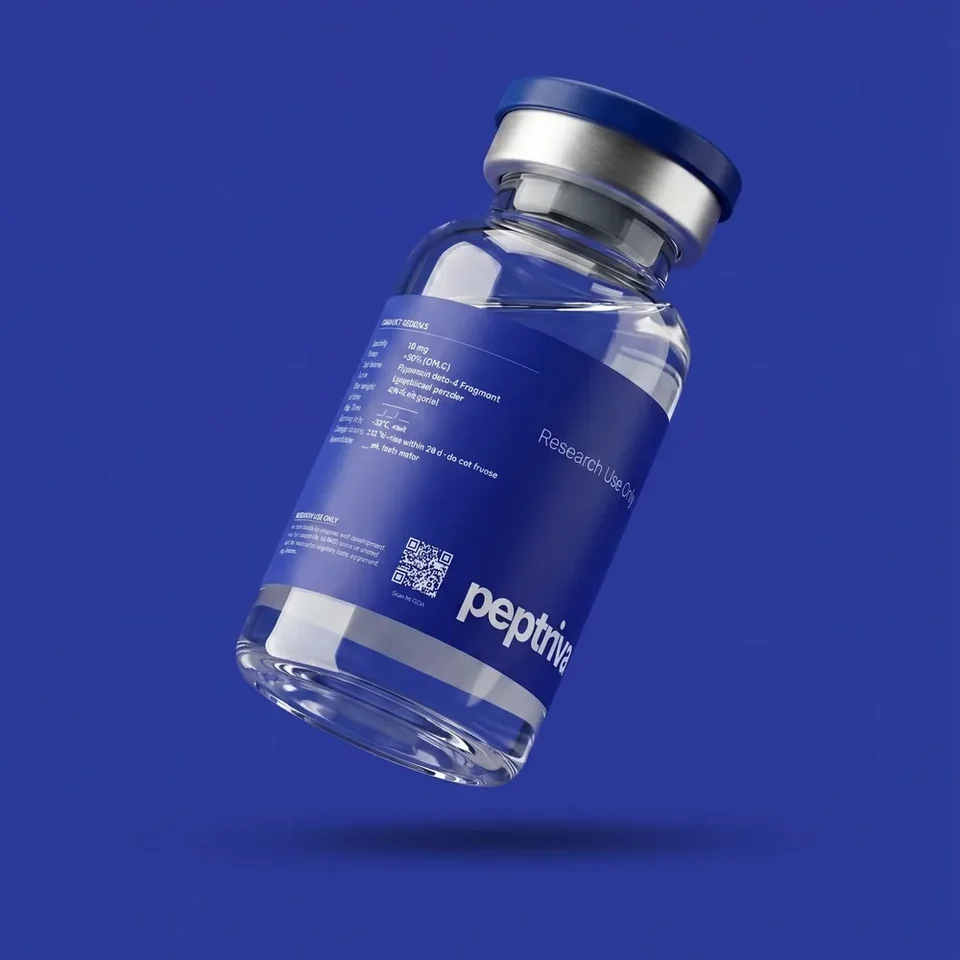
PT-141
The compound discussed here, supplied as a research compound with a certificate of analysis matched to the lot.
Does PT-141 raise blood pressure?
Yes, and briefly. Mean systolic pressure rose about 6 mmHg after dosing. Diastolic moved roughly 3.1 to 3.2 mmHg. The peak lands around 2–4 hours after the injection, then it settles.
Those are small averages. The label still treats them seriously. Vyleesi is contraindicated in people with uncontrolled high blood pressure or known cardiovascular disease.
There is history behind that caution. The first form of this drug was a nasal spray. It was tested in 1,020 men with erectile dysfunction, then dropped. Company filings blamed blood pressure. That story is on the nasal spray page.
Small effects, questionable outcomes.
Title of Spielmans & Ellefson, Journal of Sex Research, 2024Cipriani and colleagues reached a similar summary in Expert Opinion on Pharmacotherapy in 2023: a real but modest option, with a tolerability profile that drives a lot of the dropout.
What the safety record does not contain
This is the part vendor pages skip. The database is real, but it has a shape, and almost everything outside that shape is untested.
- No safety data for men at the approved dose. The pivotal program enrolled premenopausal women only. The male work was the abandoned nasal spray.
- No data above the label dose. Research vials are sold at 10 mg. The tested single dose was 1.75 mg.
- No long-term record. The pivotal trials ran 24 weeks. Years of use has not been measured.
- No postmenopausal safety data from the pivotal program.
- An incomplete publication record. Spielmans found 72.7% of planned outcomes were never published. Those were efficacy outcomes, but it tells you how much of the program reached print.
Simon and colleagues published subgroup analyses from RECONNECT in 2022, which helps. Pettigrew and Novick, writing for midwives in 2021, still framed bremelanotide as a narrow option for a narrow diagnosis. Neither extends the record past the people who were studied.
One more gap worth naming: melanocortin receptor genes vary between people. Bardhan and colleagues catalogued that variation in Diseases in 2025. Nobody has tested whether it predicts who gets nauseated.
The research vial is a different question
Everything above describes Vyleesi. A research vial is not Vyleesi. It has no FDA review behind it, and its contents are whatever the certificate says they are.
Mestria and colleagues looked directly at this in Drug Testing and Analysis in 2021. They ran mass spectrometry on melanotan II and bremelanotide bought on the black market.
LC-HRMS characterization of melanotan II and bremelanotide sold on the black market.
Title of Mestria et al., Drug Testing and Analysis, 2021The two peptides get sold side by side, and they are not the same compound. Melanotan II is the far stronger pigment agonist. A mislabeled vial moves you from the 1% row of the table to something nobody has measured.
The checkable part is the paperwork. How to read a certificate of analysis covers identity by mass spec and purity by HPLC. The PT-141 complete guide has the full picture, and the dosage calculator shows how a 10 mg vial compares to what the trials used.
PT-141
Third-party tested research compounds, each shipped with a batch-matched certificate of analysis showing HPLC purity and mass-spec identity — the documentation this site argues you should hold any supplier to.
What to know now
- Nausea was reported by 40% of women on bremelanotide in Phase III.
- About 18% stopped the drug because of adverse events.
- Skin darkening was 1% over 24 weeks, but over one-third after 16 consecutive daily doses.
- Blood pressure rose about 6 mmHg systolic and fell back within hours.
- The safety file covers premenopausal women at 1.75 mg. Men, higher doses and long-term use are untested.
- Black market vials of bremelanotide and melanotan II have been confused in published testing.
What we're watching
Vyleesi (bremelanotide) FDA approval: nausea rates and the RECONNECT safety data explained
Frequently asked questions
What is the most common PT-141 side effect?
Nausea. It was reported by 40% of women in the active arm of the Phase III trials. Vomiting, flushing, headache and injection-site reactions were also recorded. About 18% of participants stopped the drug over adverse events.
How long do PT-141 side effects last?
The drug clears quickly. Bremelanotide's half-life is about 2.7 hours. The blood pressure rise peaked around 2 to 4 hours after dosing and then settled. Skin darkening is the exception, because it does not always fade after stopping.
Does PT-141 cause permanent skin darkening?
It can persist. Focal hyperpigmentation was reported in about 1% of women over 24 weeks. In a study using 16 consecutive daily doses, over one-third developed it. Cases on the face, gums and breasts have not always resolved after the drug was stopped.
Are PT-141 side effects different in men?
Nobody knows at the approved dose. The pivotal safety program enrolled premenopausal women only. The male data comes from an abandoned nasal spray tested in 1,020 men with erectile dysfunction, which was dropped over blood pressure findings.
Is research-grade PT-141 as safe as Vyleesi?
The safety record belongs to the approved product, not the research vial. Mestria and colleagues found bremelanotide and melanotan II both circulating on the black market in 2021. Identity and purity on a third-party certificate of analysis are the only checkable part.
Why does the label limit how often it can be used?
Frequency drives the pigment risk. The label permits no more than one dose in 24 hours and no more than 8 doses a month. The gap between 1% darkening over 24 weeks and over one-third with daily dosing shows why that cap exists.
References
- Clayton, A. H., Kingsberg, S. A., Portman, D., et al. (2022). Safety profile of bremelanotide across the clinical development program. Journal of Women's Health, 31(2), 171–182. https://doi.org/10.1089/jwh.2021.0191
- Simon, J. A., Kingsberg, S. A., Portman, D., et al. (2022). Prespecified and integrated subgroup analyses from the RECONNECT phase 3 studies of bremelanotide. Journal of Women's Health, 31(3), 391–400. https://doi.org/10.1089/jwh.2021.0225
- Spielmans, G. I. (2021). Re-analyzing phase III bremelanotide trials for "hypoactive sexual desire disorder" in women. Journal of Sex Research, 58(9), 1085–1105. https://doi.org/10.1080/00224499.2021.1885601
- Spielmans, G. I., & Ellefson, E. M. (2024). Small effects, questionable outcomes: Bremelanotide for hypoactive sexual desire disorder. Journal of Sex Research, 61(4), 540–561. https://doi.org/10.1080/00224499.2023.2175192
- Mestria, S., Odoardi, S., Frison, G., & Strano Rossi, S. (2021). LC-HRMS characterization of melanotan II and bremelanotide sold on the black market. Drug Testing and Analysis, 13(4), 876–882. https://doi.org/10.1002/dta.2986
- Pfaus, J. G., Sadiq, A., Spana, C., & Clayton, A. H. (2022). The neurobiology of bremelanotide for the treatment of hypoactive sexual desire disorder in premenopausal women. CNS Spectrums, 27(3), 281–289. https://doi.org/10.1017/S109285292100002X
- Cipriani, S., Alfaroli, C., Maseroli, E., & Vignozzi, L. (2023). An evaluation of bremelanotide injection for the treatment of hypoactive sexual desire disorder. Expert Opinion on Pharmacotherapy, 24(1), 15–21. https://doi.org/10.1080/14656566.2022.2132144
- Sweeney, P., Gimenez, L. E., Hernandez, C. C., & Cone, R. D. (2023). Targeting the central melanocortin system for the treatment of metabolic disorders. Nature Reviews Endocrinology, 19(9), 507–519. https://doi.org/10.1038/s41574-023-00855-y
- Pettigrew, J. A., & Novick, A. M. (2021). Hypoactive sexual desire disorder in women: Physiology, assessment, diagnosis, and treatment. Journal of Midwifery & Women's Health, 66(6), 740–748. https://doi.org/10.1111/jmwh.13283
- Bardhan, M., Anand, A., Javed, A., et al. (2025). Polymorphism of melanocortin receptor genes — association with inflammatory traits and diseases. Diseases, 13(9), 305. https://doi.org/10.3390/diseases13090305