
Search AOD-9604 side effects and you get tidy lists. The published human record is six trials, the largest 502 people over 24 weeks, and not one of them used an injection under the skin.
The short answer. AOD-9604: The human safety record is six trials: two intravenous at 25 to 400 micrograms per kilogram, four oral from 54 mg down to 0.25 mg.
- No published trial used an injection under the skin, which is how the research market sells the compound.
- The published summaries do not break adverse events out by arm, so any percentage-based side effect list comes from somewhere else.
- The program ended because the 502-person, 24-week trial failed on effect. A short program is also a short safety record.
What the AOD-9604 safety record actually contains
AOD-9604 is a 16-amino-acid fragment of human growth hormone, residues 176 to 191. Somebody took it into people. That alone puts it ahead of most compounds sold as research peptides.
The human program ran six trials. Two gave the peptide into a vein, at 25 to 400 µg/kg. Four gave it by mouth, from 54 mg a day down to 0.25 mg. The largest ran 502 participants for 24 weeks against placebo.
That 24-week study is the single biggest block of human exposure on record. It is also the study that ended the program, because the compound stopped separating from placebo once both arms dieted and exercised. The before-and-after page takes that trial apart, and the dosage page lists what each trial administered.
The orally active peptide AOD 9604 may aid weight reduction in obese subjects.
Inpharma Weekly, 2005That line is from 2005, sitting between the early positive results and the trial that settled the question. It shows how confident the field was before the big study read out.
What side effects have actually been reported?
Here is the part the listicles skip. The published summaries we can open do not break adverse events out by arm. There is no rate table to hand you. Anyone who gives you AOD-9604 side effects with percentages next to them is getting those numbers from somewhere other than the trial reports.
What the literature does support is narrower, and it is mostly about design intent. Heffernan and colleagues reported in Hormone Research in 2000 that the synthetic lipolytic domain acted on fat metabolism in a way the parent hormone does, and the fragment was built specifically to leave the growth-promoting part of growth hormone behind. Ng and colleagues followed in Endocrinology in 2001 with chronic dosing in obese mice and in β3-adrenergic receptor knockout mice.
Designing a molecule to avoid growth hormone’s side effects is not the same as showing it avoided them in people. One is a plan. The other is data.
- The mechanism work is animal and cell work. Mice and cultured adipocytes, not trial participants.
- No published per-arm event table. So no honest percentage exists for us to quote.
- Injection-site reactions are undocumented. No trial used that route, so no trial could record them.
- The program stopped on effect, not harm. That is what the record shows. It is not the same as showing the compound is harmless.
A drug program that ends early for failure also stops collecting safety data. The quiet record is partly a short record.
What the safety record does not contain
This is the more useful half of the answer. The gaps are specific and they line up almost exactly with how the compound is sold.
| Question a buyer has | What the published record holds |
|---|---|
| Injection under the skin | No published trial. Zero. |
| Use beyond 24 weeks | No published trial |
| Use in lean or athletic adults | Trials were run in obese adults seeking weight loss |
| Pregnancy, nursing, under 18 | Nothing |
| Combination with other peptides or drugs | Nothing |
| Joint and bone use | One 2009 conference abstract, in Bone, asking the question |
That last row matters because joint repair is now a common marketing angle. Brennan, Rizzoli and Ammann titled their 2009 supplement abstract as a question: does the growth hormone-derived peptide AOD9604 have an anabolic effect on bone? A conference abstract is not a safety record. The benefits page covers what sits under each claim.
There is a second category of risk that has nothing to do with the molecule. It belongs to the vial.
- Identity and purity. Ask for the batch document, not a generic one. See how to read a certificate of analysis.
- Handling. Temperature and light exposure change what is in the vial. See peptide storage temperature.
- Reconstitution. Sterility and diluent choice are their own risk surface. See reconstitution and bacteriostatic water.
None of that is covered by any trial. A grey-market vial was not the thing that was studied.
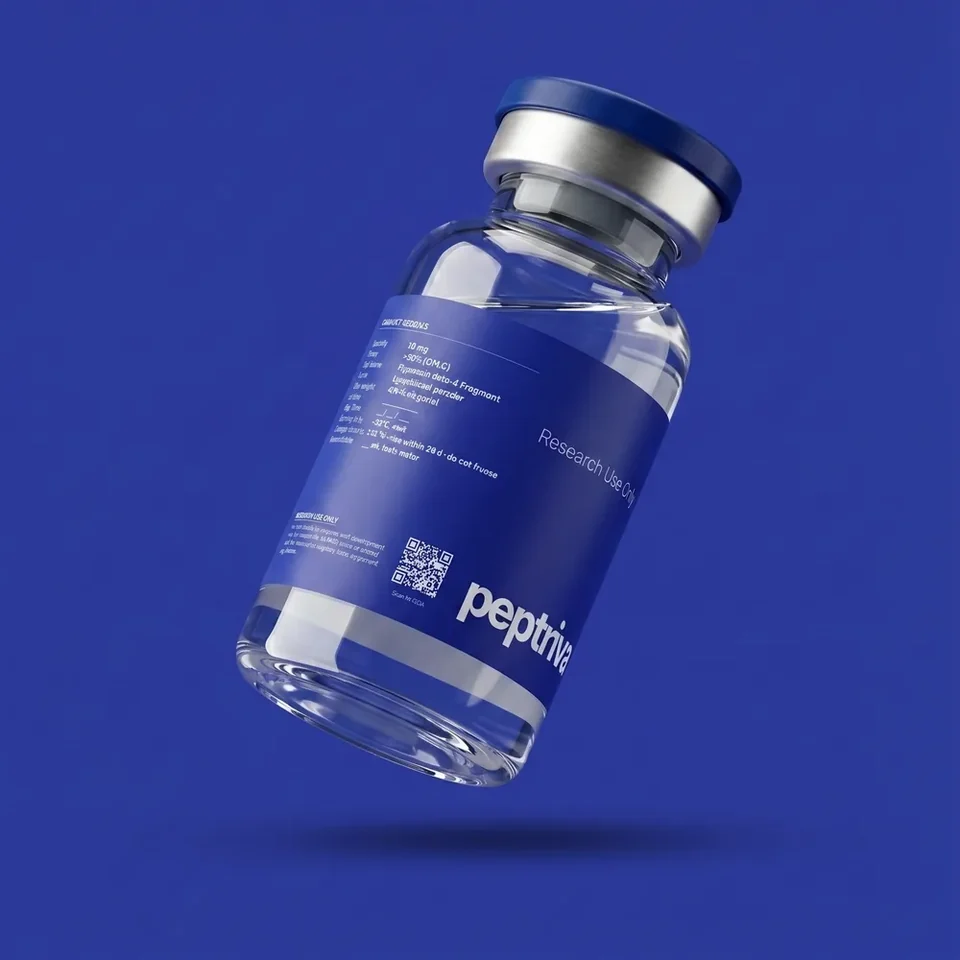
AOD-9604
The compound discussed here, supplied as a research compound with a certificate of analysis matched to the lot.
Does the GRAS label mean AOD-9604 is safe?
No. GRAS is a food concept. The FDA describes Generally Recognized as Safe as a status for substances added to food, and the notification program around it is voluntary.
So a GRAS conclusion speaks to an ingredient in something you eat. It is not a drug approval, it is not a clearance to inject anything, and it is not an FDA review of a research vial. The complete guide covers the regulatory history in full.
The FDA has never approved AOD-9604 as a drug. A food-ingredient label used as proof of injectable safety is the single most common move in this compound’s marketing.
What about the breast cancer cell study?
It exists, and it does not say what people think. Habibullah and colleagues published in Drug Design, Development and Therapy in 2022. They paired the human growth hormone fragment 176–191 with doxorubicin-loaded chitosan nanoparticles and measured toxicity against MCF-7 breast cancer cells.
That is cells in a dish, as a drug-delivery concept. The fragment enhanced the chemotherapy carrier’s effect on those cells. It does not show the peptide treats cancer in a person, and it does not show it causes cancer in a person. What it does show is that the fragment is biologically active in human cancer cells, which is a reason not to call it inert.
The fat-burning mechanism itself is also contested. Richelsen, Pedersen and Rasmussen reported in Hormone Research in 2008 on cultured adipocytes.
Absence of lipolytic activity from purified human growth hormone in cultured 3T3-L1 adipocytes.
Richelsen, Pedersen & Rasmussen, Hormone Research, 2008A 2026 Sports Medicine review by Mendias and Awan surveys approved and unapproved peptide therapies used for musculoskeletal injury and athletic performance. AOD-9604 sits in the unapproved column.
The one consequence that is certain: a failed drug test
If you compete in a tested sport, this is the side effect with no uncertainty attached. The World Anti-Doping Agency prohibits growth hormone and its fragments under section S2 of the Prohibited List.
Growth hormone (GH), its fragments and releasing factors.
World Anti-Doping Agency, Prohibited List, section S2AOD-9604 is a growth hormone fragment. That is the whole molecule, by definition. A negative efficacy trial does not make it permitted, and a food-ingredient label does not either. Our page on peptide legality covers the separate question of purchase and possession.
AOD-9604
Research-use-only material, sold by the vial with batch documentation. Check the certificate of analysis against the batch you receive.
What to know now
- The human safety record is six trials: two intravenous at 25 to 400 micrograms per kilogram, four oral from 54 mg down to 0.25 mg.
- No published trial used an injection under the skin, which is how the research market sells the compound.
- The published summaries do not break adverse events out by arm, so any percentage-based side effect list comes from somewhere else.
- The program ended because the 502-person, 24-week trial failed on effect. A short program is also a short safety record.
- GRAS is a food-ingredient status, not a drug approval and not a clearance to inject.
- WADA prohibits growth hormone fragments under section S2, which covers AOD-9604 by definition.
What we're watching
Watch for side effect lists with percentages attached. No published AOD-9604 trial summary we can open reports adverse events arm by arm, so a clean percentage has to be coming from somewhere else. Ask which trial, which arm, how many people, and which route. If the answer is a vendor page, you have your answer.
Frequently asked questions
Is AOD-9604 safe?
Nobody can answer that from the published record. Six human trials ran, the longest 24 weeks in 502 people. None used an injection under the skin. There is no published per-arm adverse event table for us to quote, and no data past 24 weeks. The absence of reported harm in a short program is not the same as a demonstration of safety.
What are the reported side effects of AOD-9604?
We cannot give you a list with rates behind it. The trial summaries available do not break events out by treatment arm. The compound was designed to avoid growth hormone's growth-promoting effects, and the mechanism work by Heffernan in 2000 and Ng in 2001 was done in mice and cells. Design intent is not human side effect reporting.
Does AOD-9604 raise IGF-1 or blood sugar?
The fragment was built to leave out the part of growth hormone that drives growth signaling. That was the design goal, reported in Hormone Research in 2000 and followed up in Endocrinology in 2001 in obese and knockout mice. We have no published human table of IGF-1 or glucose outcomes to point you to.
Is AOD-9604 FDA approved?
No. The FDA has never approved it as a drug. Marketing often cites a GRAS label instead. GRAS is the Generally Recognized as Safe status the FDA uses for substances added to food. It is about food, not about injecting a research vial.
Will AOD-9604 show up on a drug test?
It is prohibited. The World Anti-Doping Agency bans growth hormone, its fragments and its releasing factors under section S2 of the Prohibited List. AOD-9604 is a growth hormone fragment, residues 176 to 191, so it falls inside that wording.
Are the risks from the compound or from the vial?
Both, and the vial half is usually ignored. No trial studied a grey-market product. Identity, purity, endotoxin, storage temperature and sterile handling are separate questions from the molecule, and they are answered by batch documents rather than by the literature.
References
- Heffernan, M. A., Thorburn, A. W., Fam, B., Summers, R., Conway-Campbell, B., Waters, M. J., & Ng, F. M. (2000). Metabolic studies of a synthetic lipolytic domain (AOD9604) of human growth hormone. Hormone Research, 54(3), 105–111. https://doi.org/10.1159/000053183
- Ng, F. M., Sun, J., Sharma, L., Libinaki, R., Jiang, W. J., & Gianello, R. (2001). The effects of human GH and its lipolytic fragment (AOD9604) on lipid metabolism following chronic treatment in obese mice and β3-AR knock-out mice. Endocrinology, 142(12), 5182–5189. https://doi.org/10.1210/en.142.12.5182
- The orally active peptide AOD 9604 may aid weight reduction in obese subjects. (2005). Inpharma Weekly, 1469, 22. https://doi.org/10.2165/00128413-200514690-00010
- Richelsen, B., Pedersen, S. B., & Rasmussen, L. M. (2008). Absence of lipolytic activity from purified human growth hormone in cultured 3T3-L1 adipocytes. Hormone Research, 70(2), 76–82. https://doi.org/10.1159/000179698
- Brennan, T. C., Rizzoli, R., & Ammann, P. (2009). Does the growth hormone-derived peptide AOD9604 have an anabolic effect on bone? Bone, 44(Suppl. 2), S326. https://doi.org/10.1016/j.bone.2009.03.047
- Habibullah, M. M., Mohan, S., Syed, N. K., Makeen, H. A., Jamal, Q. M. S., Alothaid, H., Bantun, F., Alhazmi, A. Y., Hakami, A. R., Aleissi, A. F., & Pottoo, F. H. (2022). Human growth hormone fragment 176–191 peptide enhances the toxicity of doxorubicin-loaded chitosan nanoparticles against MCF-7 breast cancer cells. Drug Design, Development and Therapy, 16, 1963–1974. https://doi.org/10.2147/DDDT.S367586
- U.S. Food and Drug Administration. Generally Recognized as Safe (GRAS). https://www.fda.gov/food/food-ingredients-packaging/generally-recognized-safe-gras
- World Anti-Doping Agency. The Prohibited List 2026. https://www.wada-ama.org/en/prohibited-list
- Mendias, C. L., & Awan, T. M. (2026). Safety and efficacy of approved and unapproved peptide therapies for musculoskeletal injuries and athletic performance. Sports Medicine. https://doi.org/10.1007/s40279-026-02437-0